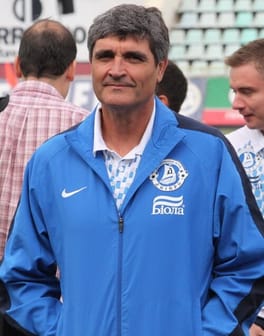
Photo: Олег Дубина / CC BY-SA 3.0 (source: Wikimedia Commons)
Juande Ramos was born on September 25, 1954 in Pedro Muñoz, Province of Ciudad Real, Spain. Public records list Juande Ramos as an association football player and association football coach. The age as of 2026 is 72.
My Take
What I admire about Juande Ramos is the unglamorous climb. He cut his teeth at amateur level before dragging Rayo Vallecano into La Liga and pushing them to a UEFA Cup quarter-final in 2001. Spells at Betis, Espanyol and Malaga, then Sevilla in 2005 — this is a manager who earned trust through results, not headlines. Coming from a small town in Ciudad Real, he strikes me as the kind of grounded, craftsman-type coach who quietly commands a dressing room. I find his career a reminder that durability and substance often outlast flash in the dugout.
This take was written by generative AI, one per person, from publicly reported facts (editorial policy). It is a reading of the record, not reporting.
1. Profile
- Name (English)
- Juande Ramos
- Name (Japanese)
- ファンデ・ラモス
- Reading
- ふぁんで・らもす
- Born
- September 25, 1954 (age 72)
- Origin
- Pedro Muñoz, Province of Ciudad Real, Spain
- Occupation
- association football player / association football coach
- Zodiac / Chinese zodiac
- Libra / Horse
2. Links
- Official sitehttp://www.juanderamos.com
- Wikipedia (English)https://en.wikipedia.org/wiki/Juande%20Ramos
- Wikipedia (Japanese)https://ja.wikipedia.org/wiki/%E3%83%95%E3%82%A1%E3%83%B3%E3%83%87%E3%83%BB%E3%83%A9%E3%83%A2%E3%82%B9
- Wikidatahttps://www.wikidata.org/wiki/Q274966
3. About this entry
Tags
- Last updated
Facts are limited to publicly available information up to 2024; non-public or unconfirmed items are omitted. English text is machine-assisted (facts translated by Sonnet, "My Take" written by Opus 4.8). The Japanese page is the source of record.
Frequently asked questions
When was Juande Ramos born?
Juande Ramos was born on September 25, 1954 and is 72 years old.
Where is Juande Ramos from?
Juande Ramos is from Pedro Muñoz, Province of Ciudad Real, Spain.
What does Juande Ramos do?
Juande Ramos works as association football player, association football coach.
Association football player — see all → · Association football coach — see all → · More people from Spain → · More people born on September 25 →