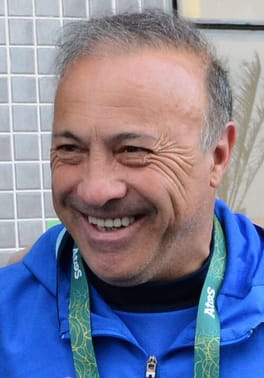
Photo: Casa Rosada / CC BY-SA 2.0 (source: Wikimedia Commons)
Julio Olarticoechea was born on October 18, 1958 in Saladillo, Buenos Aires Province, Argentina and is credited as an association football player and association football coach. That puts Julio Olarticoechea at 67 years old in 2026. The listed height is 170 cm.
My Take
Julio Olarticoechea belongs to the kind of footballer history tends to underrate, and I think that is unfair. A defender from Saladillo who lifted the 1986 World Cup with Argentina, he did it at 170 cm through grit and reading the game rather than physical dominance. The detail that always gets me is that he roomed with Maradona in Mexico; imagine sharing those nights with a man being mythologized in real time. He later turned to coaching, passing the craft forward. I have a soft spot for the unglamorous players who anchor a triumph, and Olarticoechea is exactly the sort I want remembered.
This take was written by generative AI, one per person, from publicly reported facts (editorial policy). It is a reading of the record, not reporting.
1. Profile
- Name (English)
- Julio Olarticoechea
- Name (Japanese)
- フリオ・オラルティコエチェア
- Reading
- ふりお・おらるてぃこえちぇあ
- Born
- October 18, 1958 (age 67)
- Origin
- Saladillo, Buenos Aires Province, Argentina
- Height
- 170 cm
- Occupation
- association football player / association football coach
- Zodiac / Chinese zodiac
- Libra / Dog
2. Links
3. About this entry
Tags
- Last updated
Facts are limited to publicly available information up to 2024; non-public or unconfirmed items are omitted. English text is machine-assisted (facts translated by Sonnet, "My Take" written by Opus 4.8). The Japanese page is the source of record.
Frequently asked questions
When was Julio Olarticoechea born?
Born October 18, 1958 (age 67).
Where is Julio Olarticoechea from?
Julio Olarticoechea is from Saladillo, Buenos Aires Province, Argentina.
What does Julio Olarticoechea do?
Julio Olarticoechea works as association football player, association football coach.
How tall is Julio Olarticoechea?
Julio Olarticoechea is 170 cm.
Association football player — see all → · Association football coach — see all → · More people from Argentina →