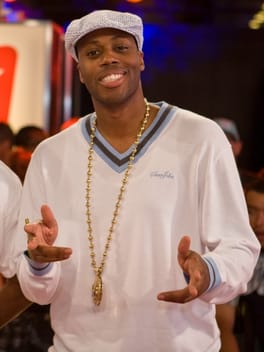
Photo: Freelance photographer Richard Burdett (Website) / CC BY 3.0 (source: Wikimedia Commons)
Public records list Kardinal Offishall as a rapper, songwriter and record producer. Kardinal Offishall was born on May 11, 1976 in Scarborough, Ontario, Canada. That works out to 50 years old in 2026. Schooling on record includes York University.
My Take
Kardinal Offishall earns my respect because he refused to imitate. Dubbed Canada's hip-hop ambassador, this Scarborough-raised, York University rapper folded reggae and dancehall into his sound instead of chasing American templates, and that conviction made him one of the 2000s' most influential producers north of the border. What interests me is how he turned a perceived periphery into a distinct voice. Representing a scene the wider world often overlooked, he made his roots the point rather than something to hide. I find that kind of confident, identity-first artistry far more durable than fashion-driven success.
This take was written by generative AI, one per person, from publicly reported facts (editorial policy). It is a reading of the record, not reporting.
1. Profile
- Name (English)
- Kardinal Offishall
- Name (Japanese)
- カーディナル・オフィシャル
- Reading
- かーでぃなる・おふぃしゃる
- Born
- May 11, 1976 (age 50)
- Origin
- Scarborough, Ontario, Canada
- Occupation
- rapper / songwriter / record producer / music executive / disc jockey
- Zodiac / Chinese zodiac
- Taurus / Dragon
2. Background
- University
- York University
3. Links
- Official sitehttps://www.mrkardinal.com/
- Instagramhttps://www.instagram.com/kardinalo/
- Xhttps://x.com/kardinalo
- Wikipedia (English)https://en.wikipedia.org/wiki/Kardinal%20Offishall
- Wikipedia (Japanese)https://ja.wikipedia.org/wiki/%E3%82%AB%E3%83%BC%E3%83%87%E3%82%A3%E3%83%8A%E3%83%AB%E3%83%BB%E3%82%AA%E3%83%95%E3%82%A3%E3%82%B7%E3%83%A3%E3%83%AB
- Wikidatahttps://www.wikidata.org/wiki/Q371238
4. About this entry
Tags
- Last updated
Facts are limited to publicly available information up to 2024; non-public or unconfirmed items are omitted. English text is machine-assisted (facts translated by Sonnet, "My Take" written by Opus 4.8). The Japanese page is the source of record.
Frequently asked questions
When was Kardinal Offishall born?
Born May 11, 1976 (age 50).
Where is Kardinal Offishall from?
Kardinal Offishall is from Scarborough, Ontario, Canada.
What does Kardinal Offishall do?
Kardinal Offishall works as rapper, songwriter, record producer, music executive, disc jockey.
Rapper — see all → · Songwriter — see all → · More people from Canada →