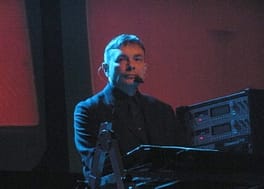
Photo: Schnatzel / CC BY-SA 3.0 (source: Wikimedia Commons)
Born on May 31, 1952, Karl Bartos is from Marktschellenberg, Upper Bavaria, Germany. Public records list Karl Bartos as a songwriter, disc jockey and record producer. The age as of 2026 is 74. Listed accolades include Człowiek ze Złotym Uchem.
My Take
For me, Karl Bartos is one of those figures whose fingerprints are all over music I love without me always realizing it. As a core member of Kraftwerk during their most influential years, he helped shape the electronic blueprint that later acts borrowed from endlessly. What strikes me is how a kid from a tiny Bavarian town, classically trained, ended up at the frontier of machine music. I respect that he kept composing and DJing on his own terms after leaving the band. His Wikidata trail is thin on personal details, but the legacy speaks loudly enough. I find his quiet, craftsman-like persistence genuinely admirable.
This take was written by generative AI, one per person, from publicly reported facts (editorial policy). It is a reading of the record, not reporting.
1. Profile
- Name (English)
- Karl Bartos
- Name (Japanese)
- カール・バルトス
- Reading
- かーる・ばるとす
- Born
- May 31, 1952 (age 74)
- Origin
- Marktschellenberg, Upper Bavaria, Germany
- Occupation
- songwriter / disc jockey / record producer / recording artist / composer
- Zodiac / Chinese zodiac
- Gemini / Dragon
2. Background
Awards & achievements
- Człowiek ze Złotym Uchem
3. Links
- Official sitehttps://www.karlbartos.com/
- Xhttps://x.com/karlbartos
- Wikipedia (English)https://en.wikipedia.org/wiki/Karl%20Bartos
- Wikipedia (Japanese)https://ja.wikipedia.org/wiki/%E3%82%AB%E3%83%BC%E3%83%AB%E3%83%BB%E3%83%90%E3%83%AB%E3%83%88%E3%82%B9
- Wikidatahttps://www.wikidata.org/wiki/Q60519
4. About this entry
Tags
- Last updated
Facts are limited to publicly available information up to 2024; non-public or unconfirmed items are omitted. English text is machine-assisted (facts translated by Sonnet, "My Take" written by Opus 4.8). The Japanese page is the source of record.
Frequently asked questions
When was Karl Bartos born?
Born May 31, 1952 (age 74).
Where is Karl Bartos from?
Karl Bartos is from Marktschellenberg, Upper Bavaria, Germany.
What does Karl Bartos do?
Karl Bartos works as songwriter, disc jockey, record producer, recording artist, composer.
Songwriter — see all → · Disc jockey — see all → · More people from Germany →