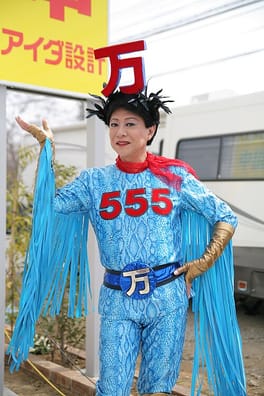
Photo: Yama11181008 / CC BY-SA 3.0 (source: Wikimedia Commons)
My Take
I'll be honest, the first time I heard Ken'ichi Mikawa's voice I did a double take, that low, smoky, almost velvety tone is just unmistakable, and once it's in your head it never leaves. There's something so deliciously theatrical about him, the sequined gowns, the feathers, the regal way he glides onto a stage like the whole room belongs to him. What I love most is the whiplash: he'll croon a sultry mood ballad that drips with old-school Showa glamour, then turn around and unleash this razor-sharp, gloriously catty wit that has everyone howling. A kid from Suwa in Nagano somehow became one of Japan's most flamboyant, fearless entertainers, and decades on he's still owning it. That's not luck, that's a genuine star who knows exactly who he is.
This take was written by generative AI, one per person, from publicly reported facts (editorial policy). It is a reading of the record, not reporting.
Overview
Ken'ichi Mikawa is a Japanese singer born on May 15, 1946, in Suwa, Nagano Prefecture. He is known for his distinctive baritone voice and mood-kayokyoku (easy-listening Japanese pop) style, performing in flamboyant stage costumes across a career spanning several decades. He maintains an official website and an Instagram presence as of 2024.
1. Profile
- Name (English)
- Ken'ichi Mikawa
- Name (Japanese)
- 美川憲一
- Reading
- みかわ けんいち
- Born
- May 15, 1946 (age 80)
- Origin
- Suwa, Nagano Prefecture, Japan
- Occupation
- Singer
- Zodiac / Chinese zodiac
- Taurus / Dog
2. Works & records
Works summary
- Appearances
- 335 (1965–2024)
- By year
- 1965: 4, 1966: 4, 1967: 9, 1968: 9, 1969: 7, 1970: 9, 1971: 9, 1972: 12, 1973: 7, 1974: 7, 1975: 7, 1976: 6, 1977: 5, 1978: 6, 1979: 6, 1980: 6, 1981: 2, 1983: 2, 1984: 2, 1986: 4, 1987: 2, 1988: 2, 1989: 4, 1990: 4, 1991: 17, 1992: 10, 1993: 9, 1994: 9, 1995: 4, 1996: 6, 1997: 6, 1998: 7, 1999: 13, 2000: 7, 2001: 7, 2002: 9, 2003: 6, 2004: 8, 2005: 9, 2006: 8, 2007: 5, 2008: 4, 2009: 6, 2010: 5, 2011: 3, 2012: 5, 2013: 3, 2014: 3, 2015: 3, 2016: 1, 2017: 2, 2018: 5, 2019: 4, 2020: 3, 2021: 2, 2022: 3, 2023: 2, 2024: 3
- Main labels/studios
- LP (16), CD (10), CRCN-1246 (3)
- Debut work
- だけどだけどだけど
Filmography / notable works
| Category | Title | Year |
|---|---|---|
| テレビドラマ作品 | 危ネェ二人・占い師・伊吹圭の事件ファイル | 2005 |
| テレビドラマ作品 | おだまりコンビ4 芸能界・殺しの輪舞 | 2002 |
| テレビドラマ作品 | おだまりコンビ2 芸能界殺しのシナリオ あの最強コンビが帰ってきた | 2000 |
| テレビドラマ作品 | おだまりコンビ3 芸能界殺しのオルゴール | 2000 |
| テレビドラマ作品 | おだまりコンビ 芸能界殺しのパズル | 1999 |
| テレビドラマ作品 | 月曜ドラマスペシャル 愛の痛み | 1990 |
| テレビドラマ作品 | 年上の女 | 1968 |
| テレビドラマ作品 | 旅は青空 | 1967 |
| テレビドラマ作品 | 金曜エンタテイメント | |
| テレビドラマ作品 | 午後の名作ドラマ劇場 黒蠍 | |
| テレビドラマ作品 | 越路吹雪物語 |
3. Links
- Official sitehttps://kenichimikawa.com/
- Instagramhttps://www.instagram.com/kenichimikawa_official/
- Wikipedia (Japanese)https://ja.wikipedia.org/wiki/%E7%BE%8E%E5%B7%9D%E6%86%B2%E4%B8%80
- Wikidatahttps://www.wikidata.org/wiki/Q977584
4. About this entry
Tags
- Last updated
Facts are limited to publicly available information up to 2024; non-public or unconfirmed items are omitted. Works and profile fields sourced from Wikipedia reflect content as of 2026-08-26. English text is machine-assisted (facts translated by Sonnet, "My Take" written by Opus 4.8). The Japanese page is the source of record.
Frequently asked questions
When was Ken'ichi Mikawa born?
Born May 15, 1946 (age 80).
Where is Ken'ichi Mikawa from?
Ken'ichi Mikawa is from Suwa, Nagano Prefecture, Japan.
What does Ken'ichi Mikawa do?
Ken'ichi Mikawa works as Singer.
What is Ken'ichi Mikawa known for?
Notable works include 危ネェ二人・占い師・伊吹圭の事件ファイル, おだまりコンビ4 芸能界・殺しの輪舞, おだまりコンビ2 芸能界殺しのシナリオ あの最強コンビが帰ってきた.