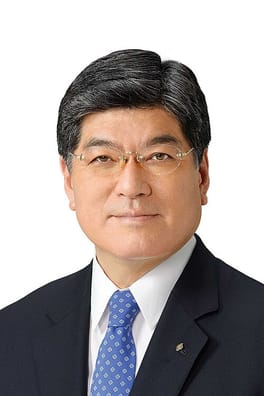
Photo: 内閣府 地方創生推進室 / CC BY 4.0 (source: Wikimedia Commons)
My Take
Born on Christmas Eve 1959 in Itabashi, Tokyo, Ken Sakamoto is one of those rare people who genuinely straddles two completely different worlds — politician and architect — and I find that combination weirdly fascinating. Most people pick a lane, but this guy apparently decided that designing physical spaces and shaping civic life were just two sides of the same coin, and honestly I can see the logic: both are about thinking carefully about how people live and move through the world. Not the loudest name in the room, but probably one of the more interesting ones.
This take was written by generative AI, one per person, from publicly reported facts (editorial policy). It is a reading of the record, not reporting.
Overview
Ken Sakamoto is a Japanese politician and architect born on December 24, 1959, in Itabashi, Tokyo. He studied at Nihon University and has built a career spanning both public service and architectural practice. He has served five terms as mayor of Itabashi Ward and holds a master's degree in architectural engineering from Nihon University.
1. Profile
- Name (English)
- Ken Sakamoto
- Name (Japanese)
- 坂本健
- Reading
- さかもと たけし
- Born
- December 24, 1959 (age 66)
- Origin
- Itabashi, Tokyo, Japan
- Occupation
- Politician / Architect
- Zodiac / Chinese zodiac
- Capricorn / Boar
2. Background
- University
- Nihon University
3. Links
- Wikipedia (Japanese)https://ja.wikipedia.org/wiki/%E5%9D%82%E6%9C%AC%E5%81%A5
- Wikidatahttps://www.wikidata.org/wiki/Q30924321
4. About this entry
Tags
- Last updated
Only publicly available facts are listed; non-public or unconfirmed items are omitted. Base data was compiled from Wikidata from June 2026 onward; ages are recalculated daily and deaths are checked against Wikidata on an ongoing basis. English text is machine-assisted (facts translated by Sonnet, "My Take" written by Opus 4.8). The Japanese page is the source of record.
Frequently asked questions
When was Ken Sakamoto born?
Ken Sakamoto was born on December 24, 1959 and is 66 years old.
Where is Ken Sakamoto from?
Ken Sakamoto is from Itabashi, Tokyo, Japan.
What does Ken Sakamoto do?
Ken Sakamoto works as Politician, Architect.
Where did Ken Sakamoto study?
Ken Sakamoto attended Nihon University.
Politician — see all → · Architect — see all → · More people from Japan → · More people born on December 24 →