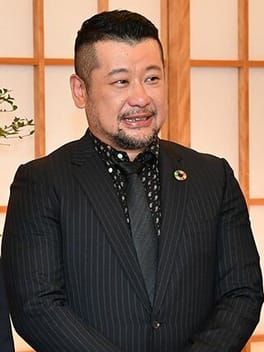
Photo: 外務省 / CC BY 4.0 (source: Wikimedia Commons)
Kendo Kobayashi is listed as an actor, seiyū and owarai tarento. Born on July 4, 1972, Kendo Kobayashi is from Osaka, Osaka Prefecture, Japan. The age as of 2026 is 54. The listed height is 172 cm. Credited works include ケンコバくっきー!の世界の前のり (2026), ケンドーコバヤシの重大発表! (2026) and ケンコバ&鈴木奈々 Tokushima自慢を探せ!!〜地方局の情報だけが頼りです〜 (2026).
My Take
If you only know Japanese comedy through its biggest exports, Kendo Kobayashi is the one you're missing. Born in Osaka in 1972, real name Tomoharu Kobayashi, he built his career inside Yoshimoto — but not by dominating the stage. His specialty is the sideline: he sits on a panel, waits, drops one dry line, and quietly walks off with the entire room. That is far harder than it looks. It requires being the most alert person present while appearing to be the least invested. He is also gloriously, unapologetically niche — combat sports, pro wrestling, manga, and the sort of material Japanese television usually keeps at arm's length, all delivered at exactly the same unbothered volume. The nickname Mr. Yaritai Hōdai, roughly Mr. Does Whatever He Wants, sounds like a joke about him. Watching him work, I think it's closer to a career strategy.
This take was written by generative AI, one per person, from publicly reported facts (editorial policy). It is a reading of the record, not reporting.
1. Profile
- Name (English)
- Kendo Kobayashi
- Name (Japanese)
- ケンドーコバヤシ
- Reading
- けんどーこばやし
- Born
- July 4, 1972 (age 54)
- Origin
- Osaka, Osaka Prefecture, Japan
- Height
- 172 cm
- Occupation
- actor / seiyū / owarai tarento
- Zodiac / Chinese zodiac
- Cancer / Rat
- Blood type
- O
- Agency
- 吉本興業
2. Works & records
Works summary
- Appearances
- 269 (1996–2026)
- By year
- 1996: 1, 1999: 3, 2000: 1, 2001: 5, 2002: 6, 2003: 5, 2004: 3, 2005: 4, 2006: 4, 2007: 8, 2008: 13, 2009: 9, 2010: 7, 2011: 9, 2012: 10, 2013: 9, 2014: 10, 2015: 3, 2016: 11, 2017: 4, 2018: 14, 2019: 12, 2020: 10, 2021: 7, 2022: 4, 2023: 7, 2024: 12, 2025: 5, 2026: 4
- Debut work
- 光速脳天!ベタキング
Filmography / notable works
| Category | Title | Year |
|---|---|---|
| Special program | ケンコバくっきー!の世界の前のり | 2026 |
| Special program | ケンドーコバヤシの重大発表! | 2026 |
| Special program | ケンコバ&鈴木奈々 Tokushima自慢を探せ!!〜地方局の情報だけが頼りです〜 | 2026 |
| TV anime | 呪術廻戦 死滅回游 | 2026 |
| Regular program | のむシリカ presents ケンドーコバヤシのキャベリバ内閣 | 2025 |
| Special program | MXグランプリ~異端芸人決定戦~ | 2025 |
| Special program | B食の旅 | 2025 |
| Special program | 地元民がこっそり教えまっせ!!耳打ちグルメベスト店 | 2025 |
| Internet program | 芯くったら負け!実のない話トーナメント | 2025 |
| Regular program | 明鏡止水 武の五輪 | 2024 |
| Special program | モーレツ!!しごき教室 | 2024 |
| Special program | 熊本カレー総選挙2024 | 2024 |
| Special program | 陣内&ケンコバが勝手にお祝い!!いらっしゃい!シン・テンマバシ | 2024 |
| Special program | ケンコバのタイでコンプラ違反? | 2024 |
| Special program | ケンドーコバヤシの世界の前乗りinThailand | 2024 |
| Special program | ケンドーコバヤシと乾杯しませんか? | 2024 |
| Special program | ケンドーコバヤシと祝杯しませんか? | 2024 |
| Special program | ケンコバ関のハッケ湯ーイノコッ旅 〜出会いとグルメ ごっつあんです〜 | 2024 |
| TV anime | キン肉マン 完璧超人始祖編 | 2024 |
| Internet program | ウソカマジカ | 2024 |
| Internet program | ヤングジャンプ45周年記念特別番組 | 2024 |
| Regular program | ケンコバのほろ酔いビジホ泊 全国版 | 2023 |
| Regular program | ケンドーコバヤシvsワールドプロレスリング〜“あの頃”を激語りセレクション〜 | 2023 |
| Special program | 夜のケンミンSHOW | 2023 |
| Special program | ケンコバ&くっきー!のヴィンテージ王国 BSよしもとSP | 2023 |
| TV drama | ひともんちゃくなら喜んで! 第1話・最終話 | 2023 |
| TV anime | 僕とロボコ | 2023 |
| Internet program | ファミコントークショップ コバヤシ玩具店 | 2023 |
| Special program | 新春!幻の優勝ネタ祭り | 2022 |
| Special program | 全方位調査型娯楽番組 らんきんぐバカ | 2022 |
| Special program | チェンソーマン | 2022 |
| TV drama | 転生みそ五郎どん〜ここは異世界?南島原〜 | 2022 |
| Regular program | ケンドーコバヤシの社長!お手伝いさせて頂きます! | 2021 |
| Special program | 創刊!コバヤシコミック | 2021 |
| Special program | ケンコバカレー部 | 2021 |
| Special program | 今夜は、おしものハナシさせてください | 2021 |
| Special program | バナナマン日村×ケンコバの仙人めし 秘境の感動のレストラン | 2021 |
| TV anime | ハコヅメ〜交番女子の逆襲〜 | 2021 |
| Internet program | セカンドチャンスウェディング | 2021 |
| Regular program | 土曜はナニする!? | 2020 |
| Regular program | 二択の王国 | 2020 |
| Special program | オレの一行 | 2020 |
| Special program | バーチャルコント | 2020 |
| TV drama | 桃色探訪〜伝説の風俗〜 | 2020 |
| Dubbing | ランボー ラスト・ブラッド | 2020 |
| Internet program | ほんトカナ!?ケンドーコバヤシの絶対に観ないほうがいいテレビ! | 2020 |
| Internet program | 家-1グランプリ2020〜お笑い自宅芸No.1決定戦〜 | 2020 |
| Internet program | ケンコバのラグビー金曜TheNIGHT | 2020 |
| Internet program | HITOSHI MATSUMOTO presents ドキュメンタル Documentary of Documental | 2020 |
| Regular program | あさイチ | 2019 |
| Regular program | ミント! | 2019 |
| Special program | 金のベンリ堂 | 2019 |
| Special program | ケンコバイク!〜あした鈴鹿8耐だし伊豆・箱根でバイク遍歴語ろうSP〜 | 2019 |
| Special program | ラグケン!〜ラグビーが見たくなる研究所〜 | 2019 |
| Special program | ネタ×チェンジ | 2019 |
| TV drama | コンフィデンスマンJP 運勢編 | 2019 |
| Theatrical anime | プロメア | 2019 |
| Theatrical anime | ドラゴンクエスト ユア・ストーリー | 2019 |
| Game | バイオハザード RE:2 | 2019 |
| Game | 遊戯王 デュエルリンクス | 2019 |
3. Links
4. About this entry
Tags
- Last updated
Facts are limited to publicly available information up to 2024; non-public or unconfirmed items are omitted. Works and profile fields sourced from Wikipedia reflect content as of 2026-08-26. English text is machine-assisted (facts translated by Sonnet, "My Take" written by Opus 4.8). The Japanese page is the source of record.
Frequently asked questions
When was Kendo Kobayashi born?
Born July 4, 1972 (age 54).
Where is Kendo Kobayashi from?
Kendo Kobayashi is from Osaka, Osaka Prefecture, Japan.
What does Kendo Kobayashi do?
Kendo Kobayashi works as actor, seiyū, owarai tarento.
How tall is Kendo Kobayashi?
Kendo Kobayashi is 172 cm.
What is Kendo Kobayashi's blood type?
O.
What agency is Kendo Kobayashi with?
Kendo Kobayashi is with 吉本興業.
What is Kendo Kobayashi known for?
Notable works include ケンコバくっきー!の世界の前のり, ケンドーコバヤシの重大発表!, ケンコバ&鈴木奈々 Tokushima自慢を探せ!!〜地方局の情報だけが頼りです〜.
Actor — see all → · Seiyū — see all → · More people from Japan →