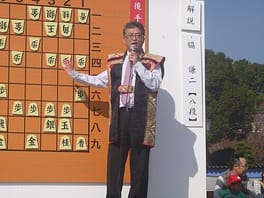
Photo: Ohtani tanya / CC BY-SA 4.0 (source: Wikimedia Commons)
My Take
Kenji Waki is the kind of guy who probably never wanted the spotlight — and honestly, that makes me respect him more. Born in Osaka in 1960, he built his whole life around shogi, that brutally deep Japanese strategy game where one wrong move can unravel hours of calculation. That takes a particular kind of mind: patient, relentless, almost monkish. The 2015 Shogi Eiryo Award tells you everything — it's the sort of recognition you earn not with flash but with decades of grinding it out on the board, reading lines that most people can't even see. I don't know much about his personal life, and I suspect he prefers it that way. Some people are defined by their craft, full stop, and Waki feels like one of them. A quiet Leo from Osaka who spent his career thinking three steps ahead — I find that genuinely cool.
This take was written by generative AI, one per person, from publicly reported facts (editorial policy). It is a reading of the record, not reporting.
Overview
Kenji Waki is a professional shogi player born on August 10, 1960, in Osaka City, Osaka Prefecture, Japan. He has built a career in the highly competitive world of professional shogi. In 2015 he received the Shogi Merit Award (将棋栄誉賞), recognizing his long-standing contribution to the game.
1. Profile
- Name (English)
- Kenji Waki
- Name (Japanese)
- 脇謙二
- Reading
- わき けんじ
- Born
- August 10, 1960 (age 66)
- Origin
- Osaka City, Osaka Prefecture, Japan
- Occupation
- Professional Shogi Player
- Zodiac / Chinese zodiac
- Leo / Rat
2. Background
Awards & achievements
- 2015 — Shogi Merit Award (将棋栄誉賞)
3. Links
- Wikipedia (Japanese)https://ja.wikipedia.org/wiki/%E8%84%87%E8%AC%99%E4%BA%8C
- Wikidatahttps://www.wikidata.org/wiki/Q11612179
4. About this entry
Tags
- Last updated
Facts are limited to publicly available information up to 2024; non-public or unconfirmed items are omitted. English text is machine-assisted (facts translated by Sonnet, "My Take" written by Opus 4.8). The Japanese page is the source of record.
Frequently asked questions
When was Kenji Waki born?
Born August 10, 1960 (age 66).
Where is Kenji Waki from?
Kenji Waki is from Osaka City, Osaka Prefecture, Japan.
What does Kenji Waki do?
Kenji Waki works as Professional Shogi Player.