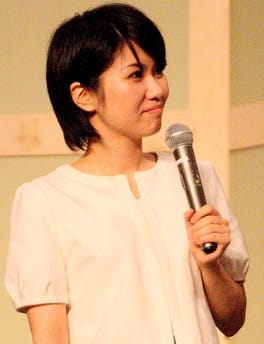
Photo: iyoupapa from Sapporo, Japan / CC BY-SA 2.0 (source: Wikimedia Commons)
My Take
Whenever I hear "professional shogi player," my brain conjures someone hunched over a board in total silence, completely unreachable by the outside world — and honestly, Kanna Suzuki fits that image in the best possible way. She grew up in Futtsu, a quiet coastal town in Chiba facing Tokyo Bay, which makes me think there's something fitting about a person raised around that kind of vast, open stillness choosing to pour everything into a game that demands total inner focus. She keeps almost everything about her personal life private, and I respect that; some people let the board do all the talking, and she seems to be exactly that kind.
This take was written by generative AI, one per person, from publicly reported facts (editorial policy). It is a reading of the record, not reporting.
Overview
Kanna Suzuki is a Japanese professional shogi player born on November 5, 1987, in Futtsu, Chiba Prefecture. She has built her career in the world of women's professional shogi, competing at the highest level of the game. Details about her personal life, agency affiliation, and competition record are not publicly disclosed.
1. Profile
- Name (English)
- Kanna Suzuki
- Name (Japanese)
- 鈴木環那
- Reading
- すずき かんな
- Born
- November 5, 1987 (age 38)
- Origin
- Futtsu, Chiba Prefecture, Japan
- Occupation
- Professional Shogi Player
- Zodiac / Chinese zodiac
- Scorpio / Rabbit
2. Links
- Wikipedia (Japanese)https://ja.wikipedia.org/wiki/%E9%88%B4%E6%9C%A8%E7%92%B0%E9%82%A3
- Wikidatahttps://www.wikidata.org/wiki/Q11649080
3. About this entry
Tags
- Last updated
Facts are limited to publicly available information up to 2024; non-public or unconfirmed items are omitted. English text is machine-assisted (facts translated by Sonnet, "My Take" written by Opus 4.8). The Japanese page is the source of record.
Frequently asked questions
When was Kanna Suzuki born?
Born November 5, 1987 (age 38).
Where is Kanna Suzuki from?
Kanna Suzuki is from Futtsu, Chiba Prefecture, Japan.
What does Kanna Suzuki do?
Kanna Suzuki works as Professional Shogi Player.