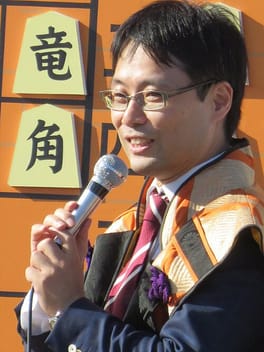
Photo: Terumasa / CC BY-SA 4.0 (source: Wikimedia Commons)
My Take
A professional shogi player who also graduated from Waseda University — that combination alone tells you something. Most players pour everything into the apprentice system from childhood, so the fact that Kitahama found a way to hold his own in one of Japan's most brutally competitive mental sports while also earning a degree at a top university is quietly impressive. Shogi is the kind of game where a single misjudged move three hours into a match can unravel everything you've built, and doing that under professional scrutiny for years takes a particular brand of stubbornness and calm. Born at the end of 1975 in Ebina, Kanagawa — not exactly the historic shogi heartland — he carved out a career in a world that rewards obsessive precision. I honestly can't imagine sitting across a board that focused for that long, so I'll just tip my hat and admit he's operating on a level I'm not built for.
This take was written by generative AI, one per person, from publicly reported facts (editorial policy). It is a reading of the record, not reporting.
Overview
Kensuke Kitahama is a Japanese professional shogi player born on December 28, 1975, in Ebina, Kanagawa Prefecture. He is a graduate of Waseda University, a distinction that sets him apart in a field where academic backgrounds are rarely highlighted. A student of Yoshimasa Saeki, he finished runner-up in the national elementary school shogi tournament in 1987, holds the rank of 8-dan, and moved from the Kanto to the Kansai branch of the Japan Shogi Association in 2014.
1. Profile
- Name (English)
- Kensuke Kitahama
- Name (Japanese)
- 北浜健介
- Reading
- きたはま けんすけ
- Born
- December 28, 1975 (age 50)
- Origin
- Ebina, Kanagawa, Japan
- Occupation
- Professional Shogi Player
- Zodiac / Chinese zodiac
- Capricorn / Rabbit
2. Background
- University
- Waseda University
3. Links
4. About this entry
Tags
- Last updated
Only publicly available facts are listed; non-public or unconfirmed items are omitted. Base data was compiled from Wikidata from June 2026 onward; ages are recalculated daily and deaths are checked against Wikidata on an ongoing basis. English text is machine-assisted (facts translated by Sonnet, "My Take" written by Opus 4.8). The Japanese page is the source of record.
Frequently asked questions
When was Kensuke Kitahama born?
Kensuke Kitahama was born on December 28, 1975 and is 50 years old.
Where is Kensuke Kitahama from?
Kensuke Kitahama is from Ebina, Kanagawa, Japan.
What does Kensuke Kitahama do?
Kensuke Kitahama works as Professional Shogi Player.
Where did Kensuke Kitahama study?
Kensuke Kitahama attended Waseda University.
More people from Japan → · More people born on December 28 →