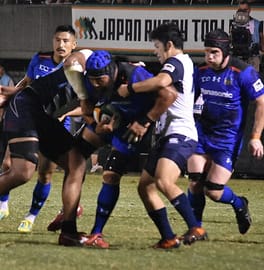
Photo: 江戸村のとくぞう / CC BY-SA 4.0 (source: Wikimedia Commons)
My Take
Koliniasi Holani is one of those guys where the name alone tells you there's a whole story behind it — a South Pacific cadence fused with the kanji character for "dragon," which feels less like a coincidence and more like a mission statement. I don't have a highlight reel to point to, but that's kind of the thing about the guys who grind in the trenches of the sport — the work speaks through physicality, not through headlines. Choosing to build a rugby career in Japan with that background takes a specific kind of resolve, and I respect that quietly stubborn energy a lot.
This take was written by generative AI, one per person, from publicly reported facts (editorial policy). It is a reading of the record, not reporting.
Overview
Koliniasi Holani (born October 25, 1981, in Japan) is a rugby union player whose full name combines a Pacific Islander given name with the Japanese character for "dragon." He attended Saitama Institute of Technology, where he developed his rugby career. He belongs to the generation of players with Fijian or Tongan-rooted backgrounds who became part of the Japanese rugby scene. Most personal and career details remain private or unrecorded in public sources.
1. Profile
- Name (English)
- Koliniasi Holani
- Name (Japanese)
- ホラニ龍コリニアシ
- Reading
- ほらに りゅうこりにあし
- Born
- October 25, 1981 (age 44)
- Origin
- Japan
- Occupation
- Rugby union player
- Zodiac / Chinese zodiac
- Scorpio / Rooster
2. Background
- University
- Saitama Institute of Technology
3. Links
4. About this entry
Tags
- Last updated
Facts are limited to publicly available information up to 2024; non-public or unconfirmed items are omitted. English text is machine-assisted (facts translated by Sonnet, "My Take" written by Opus 4.8). The Japanese page is the source of record.
Frequently asked questions
When was Koliniasi Holani born?
Born October 25, 1981 (age 44).
Where is Koliniasi Holani from?
Koliniasi Holani is from Japan.
What does Koliniasi Holani do?
Koliniasi Holani works as Rugby union player.