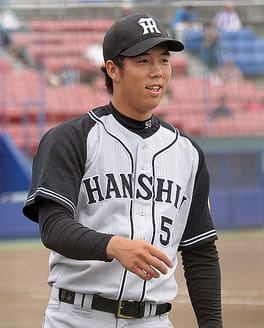
Photo: Moonlight Shado / CC BY-SA 4.0 (source: Wikimedia Commons)
My Take
I have such a soft spot for crafty lefties, and Kōyō Aoyagi is exactly my kind of pitcher. This Yokohama-born southpaw who made his name on the mound for the Hanshin Tigers doesn't try to blow you away with raw velocity. Instead he paints the corners and lets the ball dip low so hitters chase and get themselves out. That sneaky, control-first approach is the stuff I find genuinely fun to watch. He carries himself with this easy, unbothered air too, the kind of guy who doesn't let a jam show on his face, which honestly makes him more dangerous. He even tucks a little tiger nod into his X handle. I'll always root for a quiet craftsman who just keeps sharpening his one weapon and getting outs.
This take was written by generative AI, one per person, from publicly reported facts (editorial policy). It is a reading of the record, not reporting.
Story
The Art of the Sinking Pitch: Kōyō Aoyagi, the Lefty from Yokohama
Overview
Kōyō Aoyagi is a Japanese professional baseball player born on December 11, 1993, in Yokohama, Kanagawa Prefecture. He stands 182 cm tall and is known for his pitching. He attended Kanagawa Prefectural Kawasaki Kogyo High School before going on to Teikyo University.
1. Profile
- Name (English)
- Kōyō Aoyagi
- Name (Japanese)
- 青柳晃洋
- Reading
- あおやぎ こうよう
- Born
- December 11, 1993 (age 32)
- Origin
- Yokohama, Kanagawa, Japan
- Height
- 182 cm
- Occupation
- Baseball Player
- Zodiac / Chinese zodiac
- Sagittarius / Rooster
2. Background
- High school
- Kanagawa Prefectural Kawasaki Kogyo High School
- University
- Teikyo University
3. Links
4. About this entry
Tags
- Last updated
Facts are limited to publicly available information up to 2024; non-public or unconfirmed items are omitted. English text is machine-assisted (facts translated by Sonnet, "My Take" written by Opus 4.8). The Japanese page is the source of record.
Frequently asked questions
When was Kōyō Aoyagi born?
Born December 11, 1993 (age 32).
Where is Kōyō Aoyagi from?
Kōyō Aoyagi is from Yokohama, Kanagawa, Japan.
What does Kōyō Aoyagi do?
Kōyō Aoyagi works as Baseball Player.
How tall is Kōyō Aoyagi?
Kōyō Aoyagi is 182 cm.