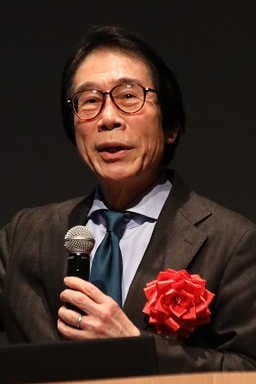
Photo: 特許庁 / CC BY 4.0 (source: Wikimedia Commons)
My Take
Honestly, when I first saw "accounting scholar" I almost scrolled past — but then I caught myself, because that's exactly the kind of reflex Kunio Itō has spent his career quietly dismantling. Corporate governance, financial reporting standards, the invisible architecture that keeps companies honest — that's his arena, and the influence that flows from that work dwarfs most celebrity footprints by a mile. He doesn't have a flashy social media presence or a tabloid trail, and somehow that makes the whole thing feel more substantial. The unglamorous specialists are often the ones holding everything together, and Itō is a pretty clear example of that.
This take was written by generative AI, one per person, from publicly reported facts (editorial policy). It is a reading of the record, not reporting.
Overview
Kunio Itō is a Japanese accounting scholar born in 1951 in Chiba Prefecture. He holds a degree from Hitotsubashi University, one of Japan's leading institutions for commerce and economics. As an academic specializing in accounting, he has contributed to the scholarly and policy discourse on corporate finance and governance in Japan.
1. Profile
- Name (English)
- Kunio Itō
- Name (Japanese)
- 伊藤邦雄
- Reading
- いとう くにお
- Born
- December 13, 1951 (age 74)
- Origin
- Chiba Prefecture, Japan
- Occupation
- Accounting scholar
- Zodiac / Chinese zodiac
- Sagittarius / Rabbit
2. Background
- University
- Hitotsubashi University
3. Links
- Wikipedia (Japanese)https://ja.wikipedia.org/wiki/%E4%BC%8A%E8%97%A4%E9%82%A6%E9%9B%84
- Wikidatahttps://www.wikidata.org/wiki/Q11380467
4. About this entry
Tags
- Last updated
Only publicly available facts are listed; non-public or unconfirmed items are omitted. Base data was compiled from Wikidata from June 2026 onward; ages are recalculated daily and deaths are checked against Wikidata on an ongoing basis. English text is machine-assisted (facts translated by Sonnet, "My Take" written by Opus 4.8). The Japanese page is the source of record.
Frequently asked questions
When was Kunio Itō born?
Kunio Itō was born on December 13, 1951 and is 74 years old.
Where is Kunio Itō from?
Kunio Itō is from Chiba Prefecture, Japan.
What does Kunio Itō do?
Kunio Itō works as Accounting scholar.
Where did Kunio Itō study?
Kunio Itō attended Hitotsubashi University.
More people from Japan → · More people born on December 13 →