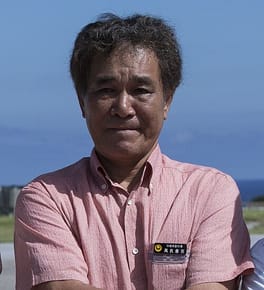
Photo: Cpl. Sara Medina / Public domain (source: Wikimedia Commons)
My Take
Kurayoshi Takara is a historian from Izena Island, Okinawa — and honestly, when you learn that Izena is the birthplace of King Shō En, the founder of the second Ryukyu dynasty, it feels almost too fitting that someone born there ended up dedicating their life to Okinawan history. Born in 1947, just a couple of years after the war that devastated the islands, he studied at Aichi University of Education before returning to plant deep roots in Okinawan scholarship. Historians don't get the spotlight — no one's screaming their name at a premiere — but the quiet, painstaking work of digging through archives and saying "this is what actually happened here" is what keeps a culture's memory alive. That kind of work earns my respect, even if the world barely notices it.
This take was written by generative AI, one per person, from publicly reported facts (editorial policy). It is a reading of the record, not reporting.
Overview
Kurayoshi Takara is a Japanese historian born in 1947 in Izena Village, Okinawa Prefecture. He studied at Aichi University of Education and has dedicated his career to the study of Okinawan history. He is recognized as a specialist in the historical research of Okinawa and its culture.
1. Profile
- Name (English)
- Kurayoshi Takara
- Name (Japanese)
- 高良倉吉
- Reading
- たから くらよし
- Born
- October 1, 1947 (age 79)
- Origin
- Izena Village, Okinawa Prefecture, Japan
- Occupation
- Historian
- Zodiac / Chinese zodiac
- Libra / Boar
2. Background
- University
- Aichi University of Education
3. Links
- Wikipedia (Japanese)https://ja.wikipedia.org/wiki/%E9%AB%98%E8%89%AF%E5%80%89%E5%90%89
- Wikidatahttps://www.wikidata.org/wiki/Q11672743
4. About this entry
Tags
- Last updated
Only publicly available facts are listed; non-public or unconfirmed items are omitted. Base data was compiled from Wikidata from June 2026 onward; ages are recalculated daily and deaths are checked against Wikidata on an ongoing basis. English text is machine-assisted (facts translated by Sonnet, "My Take" written by Opus 4.8). The Japanese page is the source of record.
Frequently asked questions
When was Kurayoshi Takara born?
Kurayoshi Takara was born on October 1, 1947 and is 79 years old.
Where is Kurayoshi Takara from?
Kurayoshi Takara is from Izena Village, Okinawa Prefecture, Japan.
What does Kurayoshi Takara do?
Kurayoshi Takara works as Historian.
Where did Kurayoshi Takara study?
Kurayoshi Takara attended Aichi University of Education.
Historian — see all → · More people from Japan → · More people born on October 1 →