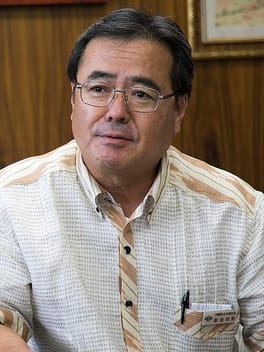
Photo: U.S. Marine Corps Photo By Cpl. Douglas D / Public domain (source: Wikimedia Commons)
My Take
I'll be honest, when I read that Kunio Arakaki is a politician born in Naha back in 1956, something in me softened. This is a guy who came up out of Okinawa, a place carrying weight the rest of Japan rarely has to feel in its bones, and he chose to spend his life in the grind of local public service rather than chasing any spotlight. He spent sixteen years as mayor of Kitanakagusuku before going to the Diet, which to me reads like decades of showing up, learning where the bodies are buried, and still pushing. There's nothing flashy here, no glitter, no viral moment, and I kind of love that. The folks who keep grinding for their hometown without applause are the ones I end up rooting for, and I'm rooting for this one.
This take was written by generative AI, one per person, from publicly reported facts (editorial policy). It is a reading of the record, not reporting.
Overview
Kunio Arakaki is a Japanese politician born on June 19, 1956, in Naha, Okinawa Prefecture. A Nihon University graduate and karate practitioner, he was mayor of Kitanakagusuku from 2004 to 2020 and then served two terms in the House of Representatives, first for the Social Democratic Party. He has an official website and an account on X. His term in the House ended in January 2026, and he later joined the Centrist Reform Alliance.
1. Profile
- Name (English)
- Kunio Arakaki
- Name (Japanese)
- 新垣邦男
- Reading
- あらかき くにお
- Born
- June 19, 1956 (age 70)
- Origin
- Naha, Okinawa Prefecture, Japan
- Occupation
- Politician
- Zodiac / Chinese zodiac
- Gemini / Monkey
2. Background
- University
- Nihon University
3. Links
- Official sitehttps://arakaki-kunio.com/
- Xhttps://x.com/arakaki_kunio
- Wikipedia (Japanese)https://ja.wikipedia.org/wiki/%E6%96%B0%E5%9E%A3%E9%82%A6%E7%94%B7
- Wikidatahttps://www.wikidata.org/wiki/Q106479603
4. About this entry
Tags
- Last updated
Only publicly available facts are listed; non-public or unconfirmed items are omitted. Base data was compiled from Wikidata from June 2026 onward; ages are recalculated daily and deaths are checked against Wikidata on an ongoing basis. English text is machine-assisted (facts translated by Sonnet, "My Take" written by Opus 4.8). The Japanese page is the source of record.
Frequently asked questions
When was Kunio Arakaki born?
Kunio Arakaki was born on June 19, 1956 and is 70 years old.
Where is Kunio Arakaki from?
Kunio Arakaki is from Naha, Okinawa Prefecture, Japan.
What does Kunio Arakaki do?
Kunio Arakaki works as Politician.
Where did Kunio Arakaki study?
Kunio Arakaki attended Nihon University.
Politician — see all → · More people from Japan → · More people born on June 19 →