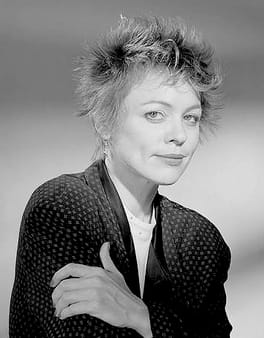
Photo: Studio Harcourt. / Public domain (source: Wikimedia Commons)
Laurie Anderson, born on June 5, 1947 in Chicago, Illinois, United States, is a composer, singer and poet. Laurie Anderson is 79 years old as of 2026. Schooling on record includes Barnard College. Listed accolades include Rome Prize, Guggenheim Fellowship (1982), Wolf Prize in Arts (2017) and 1 more.
My Take
Laurie Anderson is the kind of artist who makes genre boundaries look like an afterthought. Trained in violin and sculpture, she emerged from 1970s New York fusing language, technology, and visual imagery into performance art unlike anyone else. Composer, singer, poet, choreographer, writer, filmmaker, she refuses every box, and the Guggenheim Fellowship and Wolf Prize in Arts confirm the field caught up to her vision. For me she is a model of fearless creative curiosity, and the avant-garde is richer for it.
This take was written by generative AI, one per person, from publicly reported facts (editorial policy). It is a reading of the record, not reporting.
1. Profile
- Name (English)
- Laurie Anderson
- Name (Japanese)
- ローリー・アンダーソン
- Reading
- ろーりー・あんだーそん
- Born
- June 5, 1947 (age 79)
- Origin
- Chicago, Illinois, United States
- Occupation
- composer / singer / poet / choreographer / writer
- Zodiac / Chinese zodiac
- Gemini / Boar
2. Background
- University
- Barnard College
Awards & achievements
- Rome Prize
- 1982 Guggenheim Fellowship
- 2017 Wolf Prize in Arts
- Qwartz Electronic Music Awards
3. Links
- Official sitehttps://www.laurieanderson.com/
- Instagramhttps://www.instagram.com/laurieandersonofficial/
- Xhttps://x.com/onlyanexpert
- Wikipedia (English)https://en.wikipedia.org/wiki/Laurie%20Anderson
- Wikipedia (Japanese)https://ja.wikipedia.org/wiki/%E3%83%AD%E3%83%BC%E3%83%AA%E3%83%BC%E3%83%BB%E3%82%A2%E3%83%B3%E3%83%80%E3%83%BC%E3%82%BD%E3%83%B3
- Wikidatahttps://www.wikidata.org/wiki/Q235066
4. About this entry
Tags
- Last updated
Facts are limited to publicly available information up to 2024; non-public or unconfirmed items are omitted. English text is machine-assisted (facts translated by Sonnet, "My Take" written by Opus 4.8). The Japanese page is the source of record.
Frequently asked questions
When was Laurie Anderson born?
Laurie Anderson was born on June 5, 1947 and is 79 years old.
Where is Laurie Anderson from?
Laurie Anderson is from Chicago, Illinois, United States.
What does Laurie Anderson do?
Laurie Anderson works as composer, singer, poet, choreographer, writer.
Where did Laurie Anderson study?
Laurie Anderson attended Barnard College.
Composer — see all → · Singer — see all → · More people from the United States → · More people born on June 5 →