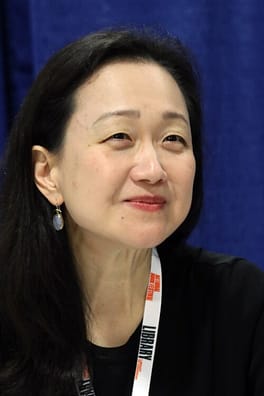
Photo: Fuzheado / CC BY-SA 4.0 (source: Wikimedia Commons)
Lee Min Jin is listed as a novelist, writer and journalist. Lee Min Jin was born in Seoul, South Korea on November 11, 1968. The age as of 2026 is 57. Schooling on record includes Georgetown University Law Center. Recorded honors include Guggenheim Fellowship (2018).
My Take
Min Jin Lee is, to me, one of the essential chroniclers of the Korean diaspora. Pachinko did something I deeply value: it placed voices long pushed to history's margins squarely at the center of world literature, earning a National Book Award finalist spot. Her pivot from law school to fiction reads in her work, where rigorous structure meets profound human attention. She is not a writer of easy comfort but of necessary truth, and I hold her craft in real esteem. Read her.
This take was written by generative AI, one per person, from publicly reported facts (editorial policy). It is a reading of the record, not reporting.
1. Profile
- Name (English)
- Lee Min Jin
- Name (Japanese)
- ミン・ジン・リー
- Reading
- みん・じん・りー
- Born
- November 11, 1968 (age 57)
- Origin
- Seoul, South Korea
- Occupation
- novelist / writer / journalist / literary critic
- Zodiac / Chinese zodiac
- Scorpio / Monkey
2. Background
- University
- Georgetown University Law Center
Awards & achievements
- 2018 Guggenheim Fellowship
3. Works & records
Filmography / notable works
| Category | Title |
|---|---|
| Notable work | Free Food for Millionaires |
4. Links
- Instagramhttps://www.instagram.com/lee_minjin/
- Xhttps://x.com/minjinlee11
- Wikipedia (English)https://en.wikipedia.org/wiki/Min%20Jin%20Lee
- Wikipedia (Japanese)https://ja.wikipedia.org/wiki/%E3%83%9F%E3%83%B3%E3%83%BB%E3%82%B8%E3%83%B3%E3%83%BB%E3%83%AA%E3%83%BC
- Wikidatahttps://www.wikidata.org/wiki/Q13563026
5. About this entry
Tags
- Last updated
Facts are limited to publicly available information up to 2024; non-public or unconfirmed items are omitted. English text is machine-assisted (facts translated by Sonnet, "My Take" written by Opus 4.8). The Japanese page is the source of record.
Frequently asked questions
When was Lee Min Jin born?
Lee Min Jin was born on November 11, 1968 and is 57 years old.
Where is Lee Min Jin from?
Lee Min Jin is from Seoul, South Korea.
What does Lee Min Jin do?
Lee Min Jin works as novelist, writer, journalist, literary critic.
Where did Lee Min Jin study?
Lee Min Jin attended Georgetown University Law Center.
What is Lee Min Jin known for?
Lee Min Jin's notable works include Free Food for Millionaires.
Novelist — see all → · Writer — see all → · More people from South Korea → · More people born on November 11 →