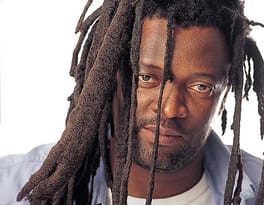
Photo: Music Updater Uganda / CC BY-SA 4.0 (source: Wikimedia Commons)
Lucky Dube was born on August 3, 1964 in Ermelo, Mpumalanga, South Africa. Lucky Dube was listed as a singer, songwriter and guitarist. Death is recorded on October 18, 2007, at the age of 43.
My Take
Lucky Dube is the kind of artist I keep coming back to. He took reggae, a sound born an ocean away, and bent it into a voice for South Africans living under apartheid, which is no small feat of adaptation. Winning Best Selling African Musician in 1996 confirms the reach, but what moves me is the moral weight inside the grooves. His killing in a 2007 robbery at just 43 still feels like an unfinished sentence. For me he stands as proof that protest can groove, and that the music outlives the violence done to the man who made it.
This take was written by generative AI, one per person, from publicly reported facts (editorial policy). It is a reading of the record, not reporting.
1. Profile
- Name (English)
- Lucky Dube
- Name (Japanese)
- ラッキー・デューベ
- Reading
- らっきー・でゅーべ
- Born
- August 3, 1964 – October 18, 2007
- Origin
- Ermelo, Mpumalanga, South Africa
- Occupation
- singer / songwriter / guitarist / actor / composer
- Zodiac / Chinese zodiac
- Leo / Dragon
2. Links
- Official sitehttps://luckydubelegacy.com/
- Wikipedia (English)https://en.wikipedia.org/wiki/Lucky%20Dube
- Wikipedia (Japanese)https://ja.wikipedia.org/wiki/%E3%83%A9%E3%83%83%E3%82%AD%E3%83%BC%E3%83%BB%E3%83%87%E3%83%A5%E3%83%BC%E3%83%99
- Wikidatahttps://www.wikidata.org/wiki/Q380147
3. About this entry
Tags
- Last updated
Facts are limited to publicly available information up to 2024; non-public or unconfirmed items are omitted. English text is machine-assisted (facts translated by Sonnet, "My Take" written by Opus 4.8). The Japanese page is the source of record.
Frequently asked questions
When was Lucky Dube born?
Born August 3, 1964.
When did Lucky Dube die?
Died October 18, 2007, aged 43.
Where was Lucky Dube from?
Lucky Dube was from Ermelo, Mpumalanga, South Africa.
What did Lucky Dube do?
Lucky Dube worked as singer, songwriter, guitarist, actor, composer.
Singer — see all → · Songwriter — see all → · More people from South Africa →