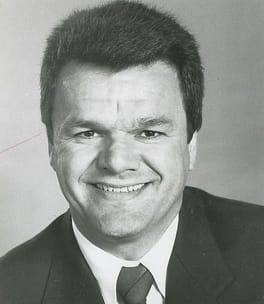
Photo: New York Rangers / NHL / Public domain (source: Wikimedia Commons)
Marcel Dionne was born on August 3, 1951 in Drummondville, Quebec, Canada and is credited as an ice hockey player. As of 2026, Marcel Dionne is 75 years old. Awards on record include Art Ross Trophy (1980), Lady Byng Memorial Trophy (1975, 1977), Lester B. Pearson Award (1979, 1980) and 3 more. The listed height is 172 cm.
My Take
Marcel Dionne is my kind of legend, the proof that size is overrated. At just 172 cm he played eighteen NHL seasons across Detroit, Los Angeles and New York, collecting the Art Ross Trophy and a place in the Hockey Hall of Fame. What catches my eye, though, are his two Lady Byng trophies, awarded for gentlemanly play. To pile up points while staying that disciplined is a rare blend of fire and grace. A small centre from Drummondville, Quebec who outlasted bigger men through intelligence and will, Dionne is the artisan athlete I will always root for over the pure phenom.
This take was written by generative AI, one per person, from publicly reported facts (editorial policy). It is a reading of the record, not reporting.
1. Profile
- Name (English)
- Marcel Dionne
- Name (Japanese)
- マーセル・ディオン
- Reading
- まーせる・でぃおん
- Born
- August 3, 1951 (age 75)
- Origin
- Drummondville, Quebec, Canada
- Height
- 172 cm
- Occupation
- ice hockey player
- Zodiac / Chinese zodiac
- Leo / Rabbit
2. Background
Awards & achievements
- 1980 Art Ross Trophy
- 1975 Lady Byng Memorial Trophy
- 1977 Lady Byng Memorial Trophy
- 1979 Lester B. Pearson Award
- 1980 Lester B. Pearson Award
- Quebec Sports Hall of Fame
- Canada's Sports Hall of Fame
- Hockey Hall of Fame
3. Links
- Official sitehttps://www.marceldionne.com
- Wikipedia (English)https://en.wikipedia.org/wiki/Marcel%20Dionne
- Wikipedia (Japanese)https://ja.wikipedia.org/wiki/%E3%83%9E%E3%83%BC%E3%82%BB%E3%83%AB%E3%83%BB%E3%83%87%E3%82%A3%E3%82%AA%E3%83%B3
- Wikidatahttps://www.wikidata.org/wiki/Q141082
4. About this entry
Tags
- Last updated
Facts are limited to publicly available information up to 2024; non-public or unconfirmed items are omitted. English text is machine-assisted (facts translated by Sonnet, "My Take" written by Opus 4.8). The Japanese page is the source of record.
Frequently asked questions
When was Marcel Dionne born?
Born August 3, 1951 (age 75).
Where is Marcel Dionne from?
Marcel Dionne is from Drummondville, Quebec, Canada.
What does Marcel Dionne do?
Marcel Dionne works as ice hockey player.
How tall is Marcel Dionne?
Marcel Dionne is 172 cm.