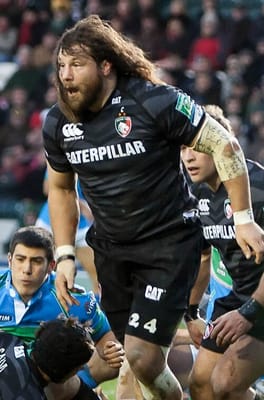
Photo: Graham Wilson from United Kingdom / CC BY 2.0 (source: Wikimedia Commons)
Martin Castrogiovanni is listed as a rugby union player and television personality. Martin Castrogiovanni was born in Paraná, Entre Ríos Province, Argentina on October 21, 1981. That works out to 44 years old in 2026. Recorded honors include bronze medal for athletic prowess. The listed height is 188 cm.
My Take
Castrogiovanni's story moves me because it is about belonging as much as rugby. Born in Paraná, Argentina, he crossed an ocean as a teenager and reinvented himself as an Italian, earning 119 caps over fourteen years through sheer front-row grit. The prop is the unglamorous engine room of the scrum, and to do it that long takes a stubbornness I genuinely admire. What I love most is the second act: the man who once gritted his teeth in scrums became a beaming television personality. That range, from brutal physicality to warmth in front of a camera, makes him impossible not to like.
This take was written by generative AI, one per person, from publicly reported facts (editorial policy). It is a reading of the record, not reporting.
1. Profile
- Name (English)
- Martin Castrogiovanni
- Name (Japanese)
- マルティン・レアンドロ・カストロジョヴァンニ
- Reading
- まるてぃん・れあんどろ・かすとろじょゔぁんに
- Born
- October 21, 1981 (age 44)
- Origin
- Paraná, Entre Ríos Province, Argentina
- Height
- 188 cm
- Occupation
- rugby union player / television personality
- Zodiac / Chinese zodiac
- Libra / Rooster
2. Background
Awards & achievements
- bronze medal for athletic prowess
3. Links
- Instagramhttps://www.instagram.com/castrito81/
- Wikipedia (English)https://en.wikipedia.org/wiki/Mart%C3%ADn%20Castrogiovanni
- Wikipedia (Japanese)https://ja.wikipedia.org/wiki/%E3%83%9E%E3%83%AB%E3%83%86%E3%82%A3%E3%83%B3%E3%83%BB%E3%82%AB%E3%82%B9%E3%83%88%E3%83%AD%E3%82%B8%E3%83%A7%E3%83%B4%E3%82%A1%E3%83%B3%E3%83%8B
- Wikidatahttps://www.wikidata.org/wiki/Q1039026
4. About this entry
Tags
- Last updated
Facts are limited to publicly available information up to 2024; non-public or unconfirmed items are omitted. English text is machine-assisted (facts translated by Sonnet, "My Take" written by Opus 4.8). The Japanese page is the source of record.
Frequently asked questions
When was Martin Castrogiovanni born?
Born October 21, 1981 (age 44).
Where is Martin Castrogiovanni from?
Martin Castrogiovanni is from Paraná, Entre Ríos Province, Argentina.
What does Martin Castrogiovanni do?
Martin Castrogiovanni works as rugby union player, television personality.
How tall is Martin Castrogiovanni?
Martin Castrogiovanni is 188 cm.
Rugby union player — see all → · Television personality — see all → · More people from Argentina →