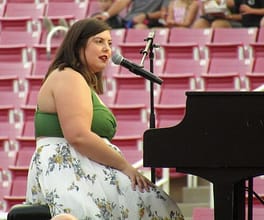
Photo: Ben P L from Provo, USA / CC BY-SA 2.0 (source: Wikimedia Commons)
Born on May 3, 1989 in Seattle, Washington, United States, Mary Lambert is a singer-songwriter, composer and musician. As of 2026, Mary Lambert is 37 years old. Education on record includes Mariner High School and Cornish College of the Arts.
My Take
Mary Lambert moves me because she sings the things most people are afraid to say aloud. Her vocal on Macklemore and Ryan Lewis's Same Love turned an LGBTQ rights anthem into something tender and undeniable, and that took real courage. A Seattle singer-songwriter who is also a poet and spoken-word artist, she does not chase pretty melodies; she folds pain and pride together into honest language. That, to me, is her true strength. From Mariner High to Cornish College of the Arts, she sharpened a voice entirely her own. I love that her music reaches out and steadies the wounded.
This take was written by generative AI, one per person, from publicly reported facts (editorial policy). It is a reading of the record, not reporting.
1. Profile
- Name (English)
- Mary Lambert
- Name (Japanese)
- メアリー・ランバート
- Reading
- めありー・らんばーと
- Born
- May 3, 1989 (age 37)
- Origin
- Seattle, Washington, United States
- Occupation
- singer-songwriter / composer / musician / poet / singer
- Zodiac / Chinese zodiac
- Taurus / Snake
2. Background
- High school
- Mariner High School
- University
- Cornish College of the Arts
3. Links
- Official sitehttps://marylambertsings.com/
- Instagramhttps://www.instagram.com/marylambertsing/
- Xhttps://x.com/marylambertsing
- Wikipedia (English)https://en.wikipedia.org/wiki/Mary%20Lambert%20(singer)
- Wikidatahttps://www.wikidata.org/wiki/Q13077226
4. About this entry
Tags
- Last updated
Facts are limited to publicly available information up to 2024; non-public or unconfirmed items are omitted. English text is machine-assisted (facts translated by Sonnet, "My Take" written by Opus 4.8). The Japanese page is the source of record.
Frequently asked questions
When was Mary Lambert born?
Mary Lambert was born on May 3, 1989 and is 37 years old.
Where is Mary Lambert from?
Mary Lambert is from Seattle, Washington, United States.
What does Mary Lambert do?
Mary Lambert works as singer-songwriter, composer, musician, poet, singer.
Where did Mary Lambert study?
Mary Lambert attended Cornish College of the Arts.
Singer-songwriter — see all → · Composer — see all → · More people from the United States → · More people born on May 3 →