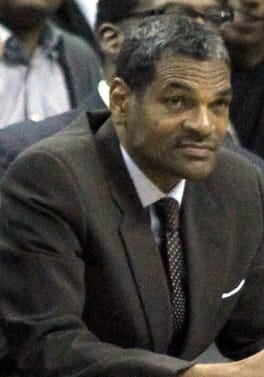
Photo: Keith Allison from Owings Mills, USA / CC BY-SA 2.0 (source: Wikimedia Commons)
Maurice Cheeks was born in Chicago, Illinois, United States on September 8, 1956. Maurice Cheeks is a basketball player and basketball coach. That works out to 70 years old in 2026. Schooling on record includes DuSable High School and West Texas A&M University. The listed height is 185 cm.
My Take
What strikes me about Maurice Cheeks is how rare his longevity is. He spent his playing days as a steady, defense-first point guard before reinventing himself as a coach, leading the Trail Blazers, 76ers, and Pistons and later working as an assistant with the Knicks. A 2018 Hall of Fame induction as a player feels like overdue recognition for someone whose game was always more about substance than highlights. Coming out of Chicago and West Texas A&M, he never seemed flashy to me, but that quiet competence is exactly why his name still carries weight inside NBA circles decades later.
This take was written by generative AI, one per person, from publicly reported facts (editorial policy). It is a reading of the record, not reporting.
1. Profile
- Name (English)
- Maurice Cheeks
- Name (Japanese)
- モーリス・チークス
- Reading
- もーりす・ちーくす
- Born
- September 8, 1956 (age 70)
- Origin
- Chicago, Illinois, United States
- Height
- 185 cm
- Occupation
- basketball player / basketball coach
- Zodiac / Chinese zodiac
- Virgo / Monkey
2. Background
- High school
- DuSable High School
- University
- West Texas A&M University
3. Links
4. About this entry
Tags
- Last updated
Facts are limited to publicly available information up to 2024; non-public or unconfirmed items are omitted. English text is machine-assisted (facts translated by Sonnet, "My Take" written by Opus 4.8). The Japanese page is the source of record.
Frequently asked questions
When was Maurice Cheeks born?
Born September 8, 1956 (age 70).
Where is Maurice Cheeks from?
Maurice Cheeks is from Chicago, Illinois, United States.
What does Maurice Cheeks do?
Maurice Cheeks works as basketball player, basketball coach.
How tall is Maurice Cheeks?
Maurice Cheeks is 185 cm.
Basketball player — see all → · Basketball coach — see all → · More people from the United States →