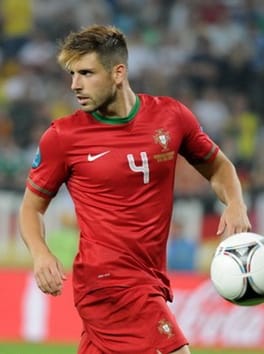
Photo: Илья Хохлов/Ilya Khokhlov/Ilja Chochłow / CC BY-SA 3.0 (source: Wikimedia Commons)
Miguel Veloso was born on May 11, 1986 in Coimbra, Portugal and is credited as an association football player and association football coach. As of 2026, Miguel Veloso is 40 years old. The listed height is 180 cm.
My Take
Miguel Veloso is the kind of midfielder I always appreciate watching, because so much of his value never shows up in highlight reels. A defensive midfielder who could also shift to attacking left-back, he built his name at Sporting CP with over 150 appearances before a long run in Italy with Genoa and Hellas Verona, racking up more than 200 Serie A games. That sustained level in a demanding league tells me everything about his reliability. Coming out of Coimbra, Portugal, and later moving into coaching, he strikes me as a player whose football intelligence naturally points toward the bench.
This take was written by generative AI, one per person, from publicly reported facts (editorial policy). It is a reading of the record, not reporting.
1. Profile
- Name (English)
- Miguel Veloso
- Name (Japanese)
- ミゲル・ヴェローゾ
- Reading
- みげる・ゔぇろーぞ
- Born
- May 11, 1986 (age 40)
- Origin
- Coimbra, Portugal
- Height
- 180 cm
- Occupation
- association football player / association football coach
- Zodiac / Chinese zodiac
- Taurus / Tiger
2. Links
3. About this entry
Tags
- Last updated
Facts are limited to publicly available information up to 2024; non-public or unconfirmed items are omitted. English text is machine-assisted (facts translated by Sonnet, "My Take" written by Opus 4.8). The Japanese page is the source of record.
Frequently asked questions
When was Miguel Veloso born?
Born May 11, 1986 (age 40).
Where is Miguel Veloso from?
Miguel Veloso is from Coimbra, Portugal.
What does Miguel Veloso do?
Miguel Veloso works as association football player, association football coach.
How tall is Miguel Veloso?
Miguel Veloso is 180 cm.
Association football player — see all → · Association football coach — see all → · More people from Portugal →