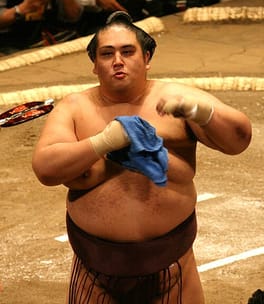
Photo: Morio / CC BY-SA 3.0 (source: Wikimedia Commons)
My Take
I'll be honest, Miyabiyama is one of those wrestlers I can picture instantly: that enormous frame from Mito barreling forward with pure oshi-zumo, all thrust and shove, no fancy belt grips or sidesteps. There's something I genuinely love about a man who just plants his hands in your chest and drives. He climbed fast and reached ozeki young, which tells you the talent was real and not just bulk. What sticks with me, though, is the second act. Hanging up the mawashi and becoming a stablemaster, passing the craft down rather than chasing the spotlight, feels exactly right for him. A 1977 Leo with that kind of stubborn, straight-ahead dignity, the type who'd rather win by sheer weight and conviction than by trickery. Quietly admirable.
This take was written by generative AI, one per person, from publicly reported facts (editorial policy). It is a reading of the record, not reporting.
Overview
Miyabiyama Tetsushi is a Japanese sumo wrestler born on July 28, 1977, in Mito, Ibaraki Prefecture. Known for his powerful thrusting and pushing style, he rose to the rank of ozeki during his active career. After retiring from competitive sumo, he took on a role as a stable master, contributing to the development of the next generation of wrestlers. He maintains a presence on social media through an X (formerly Twitter) account associated with sumo.
1. Profile
- Name (English)
- Miyabiyama Tetsushi
- Name (Japanese)
- 雅山哲士
- Reading
- みやびやま てつし
- Born
- July 28, 1977 (age 49)
- Origin
- Mito, Ibaraki Prefecture, Japan
- Occupation
- Sumo wrestler
- Zodiac / Chinese zodiac
- Leo / Snake
2. Links
3. About this entry
Tags
- Last updated
Facts are limited to publicly available information up to 2024; non-public or unconfirmed items are omitted. English text is machine-assisted (facts translated by Sonnet, "My Take" written by Opus 4.8). The Japanese page is the source of record.
Frequently asked questions
When was Miyabiyama Tetsushi born?
Born July 28, 1977 (age 49).
Where is Miyabiyama Tetsushi from?
Miyabiyama Tetsushi is from Mito, Ibaraki Prefecture, Japan.
What does Miyabiyama Tetsushi do?
Miyabiyama Tetsushi works as Sumo wrestler.