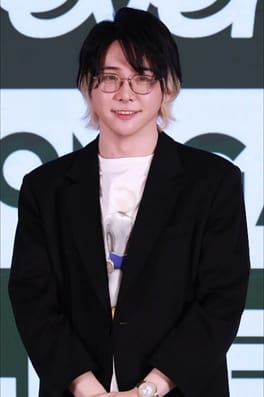
Photo: 티비텐 TV10 / CC BY 3.0 (source: Wikimedia Commons)
My Take
I'll be honest, I didn't fully clock how much one guy was carrying in Mrs. GREEN APPLE until I dug in. Motoki Ohmori writes it, sings it, and basically architects the whole sound, and that kind of greedy, do-it-all instinct should be annoying but instead it just keeps landing. Those big summer-coded songs become part of the scenery, the sort of thing you hear drifting out of a convenience store and don't even question. His voice sails up into these high registers like it's effortless, and that's the trick, because effortless usually means somebody obsessed over every detail. What I love most is how bright and bouncy it all sounds on the surface while the lyrics quietly say something heavier. A kid from western Tokyo turning into a guy the whole country hums along with, that's no small thing.
This take was written by generative AI, one per person, from publicly reported facts (editorial policy). It is a reading of the record, not reporting.
Story
The Man Who Carries It All: Motoki Ohmori and the Sound of Summer
Overview
Motoki Ohmori is a Japanese singer-songwriter born on September 14, 1996, in Nishi-Tokyo City, Tokyo. He is best known as the frontman of the band Mrs. GREEN APPLE, for which he writes music, lyrics, and handles lead vocals. Songs such as "Ao to Natsu" and "Dance Hall" have become staples of Japanese popular music, widely recognized as part of the country's seasonal soundscape.
1. Profile
- Name (English)
- Motoki Ohmori
- Name (Japanese)
- 大森元貴
- Reading
- おおもり もとき
- Born
- September 14, 1996 (age 30)
- Origin
- Nishi-Tokyo City, Tokyo, Japan
- Occupation
- Singer-songwriter
- Zodiac / Chinese zodiac
- Virgo / Rat
- Active years
- 2013 -
2. Works & records
Works summary
- Appearances
- 44 (2012–2026)
- By year
- 2012: 1, 2017: 3, 2019: 1, 2020: 2, 2021: 5, 2022: 1, 2023: 1, 2024: 3, 2025: 10, 2026: 10
- Debut work
- 13歳のハローワーク
Filmography / notable works
| Category | Title | Year |
|---|---|---|
| TV drama | ナンバーワン戦隊ゴジュウジャー 第45話 | 2026 |
| Radio drama | さいごのうた | 2026 |
| Music program | NHK夏の音楽祭 うたであえたら 2026 | 2026 |
| CM | 淡麗グリーンラベル | 2026 |
| CM | 自分をワクワク | 2026 |
| Radio program | TOKYO SPEAKEASY | 2025 |
| Film | #真相をお話しします | 2025 |
| TV drama | あんぱん | 2025 |
| TV drama | あんぱん 特別編 第2回・第3回 | 2025 |
| CM | キリングッドエール | 2025 |
| CM | FREED | 2025 |
| CM | 初割キャンペーン | 2025 |
| YouTube | AlwayS with Motoki Ohmori from Mrs. GREEN APPLE | 2025 |
| Web drama | 忍者戦隊カクレンジャー 第三部・中年奮闘編 | 2024 |
| CM | 〜さあ行こう僕らの夢へ〜 | 2023 |
| Radio program | ミセスLOCKS! | 2020 |
| TV drama | 13歳のハローワーク | 2012 |
| シングル・EP | French | |
| シングル・EP | メメント・モリ | |
| シングル・EP | わたしの音 | |
| シングル・EP | Midnight | |
| シングル・EP | メイプル | |
| シングル・EP | ヒカルモノクラクナル | |
| シングル・EP | 絵画 | |
| シングル・EP | こたえあわせ | |
| Mini album | 0.2mm | |
| Radio drama | 特集オーディオドラマ | |
| CM | 朝日新聞社 | |
| CM | キリンビール | |
| CM | 日本経済新聞社 日経電子版 | |
| YouTube | THE FIRST TAKE |
3. Links
4. About this entry
Tags
- Last updated
Facts are limited to publicly available information up to 2024; non-public or unconfirmed items are omitted. Works and profile fields sourced from Wikipedia reflect content as of 2026-08-26. English text is machine-assisted (facts translated by Sonnet, "My Take" written by Opus 4.8). The Japanese page is the source of record.
Frequently asked questions
When was Motoki Ohmori born?
Born September 14, 1996 (age 30).
Where is Motoki Ohmori from?
Motoki Ohmori is from Nishi-Tokyo City, Tokyo, Japan.
What does Motoki Ohmori do?
Motoki Ohmori works as Singer-songwriter.
How long has Motoki Ohmori been active?
2013 -.
What is Motoki Ohmori known for?
Notable works include ナンバーワン戦隊ゴジュウジャー 第45話, さいごのうた, NHK夏の音楽祭 うたであえたら 2026.