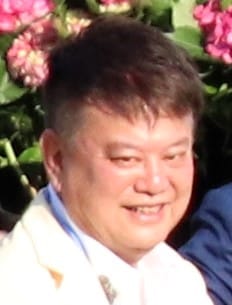
Photo: Will629 / CC0 (source: Wikimedia Commons)
Natalis Chan is a comedian, presenter and film producer, born on December 3, 1950. As of 2026, Natalis Chan is 75 years old. Education on record includes St. Joseph's College. Awards on record include Bronze Bauhinia Star (2020).
My Take
Natalis Chan is the sort of all-rounder I cannot help but love. Comedian, host, actor, singer, producer, and then, almost absurdly, a horse racing commentator and trainer whose horses won 54 races including six triple-trifectas. That refusal to stay in one lane is exactly what makes him a fixture of Hong Kong entertainment. Born in 1950 and known affectionately as Smart, his quick wit kept him front and centre for decades, and the 2020 Bronze Bauhinia Star feels well earned. I admire performers who treat every opportunity as a playground rather than a niche. Chan feels less like a single act and more like a slice of an entire era.
This take was written by generative AI, one per person, from publicly reported facts (editorial policy). It is a reading of the record, not reporting.
1. Profile
- Name (English)
- Natalis Chan
- Name (Japanese)
- ナタリス・チャン
- Reading
- なたりす・ちゃん
- Born
- December 3, 1950 (age 75)
- Occupation
- comedian / presenter / film producer / actor / singer
- Zodiac / Chinese zodiac
- Sagittarius / Tiger
2. Background
- University
- St. Joseph's College
Awards & achievements
- 2020 Bronze Bauhinia Star
3. Links
- Wikipedia (English)https://en.wikipedia.org/wiki/Natalis%20Chan
- Wikipedia (Japanese)https://ja.wikipedia.org/wiki/%E3%83%8A%E3%82%BF%E3%83%AA%E3%82%B9%E3%83%BB%E3%83%81%E3%83%A3%E3%83%B3
- Wikidatahttps://www.wikidata.org/wiki/Q698507
4. About this entry
Tags
- Last updated
Facts are limited to publicly available information up to 2024; non-public or unconfirmed items are omitted. English text is machine-assisted (facts translated by Sonnet, "My Take" written by Opus 4.8). The Japanese page is the source of record.
Frequently asked questions
When was Natalis Chan born?
Born December 3, 1950 (age 75).
What does Natalis Chan do?
Natalis Chan works as comedian, presenter, film producer, actor, singer.