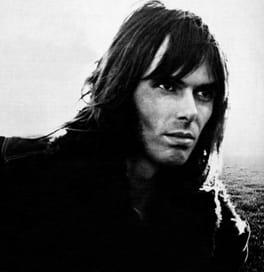
Photo: Columbia Records / Public domain (source: Wikimedia Commons)
Public records list Nicky Hopkins as a pianist, session musician and keyboardist. Nicky Hopkins was born in Greater London, United Kingdom on February 24, 1944. Death is recorded on September 6, 1994, at the age of 50.
My Take
Nicky Hopkins is one of those musicians who never had his name on the marquee but whose fingerprints are all over some of the greatest rock records ever made. This London-born session pianist played on landmark tracks by the Rolling Stones, the Who, the Kinks, Jefferson Airplane, and even worked alongside all four solo Beatles — a list that reads like a hall of fame greatest-hits package. What floors me is how distinct his touch was: crystalline, slightly percussive, never showy for its own sake, but always the element that gave a song its spine. He passed away in 1994 at just fifty, and the tragedy is that most casual listeners still don't know his name even though they've heard his playing thousands of times. The unsung session musician is a tired cliché, but Nicky Hopkins genuinely earned every word of it.
This take was written by generative AI, one per person, from publicly reported facts (editorial policy). It is a reading of the record, not reporting.
1. Profile
- Name (English)
- Nicky Hopkins
- Name (Japanese)
- ニッキー・ホプキンス
- Reading
- にっきー・ほぷきんす
- Born
- February 24, 1944 – September 6, 1994
- Origin
- Greater London, United Kingdom
- Occupation
- pianist / session musician / keyboardist / singer / songwriter
- Zodiac / Chinese zodiac
- Pisces / Monkey
2. Links
- Official sitehttps://www.rocksoff.org/nicky.htm
- Wikipedia (English)https://en.wikipedia.org/wiki/Nicky%20Hopkins
- Wikipedia (Japanese)https://ja.wikipedia.org/wiki/%E3%83%8B%E3%83%83%E3%82%AD%E3%83%BC%E3%83%BB%E3%83%9B%E3%83%97%E3%82%AD%E3%83%B3%E3%82%B9
- Wikidatahttps://www.wikidata.org/wiki/Q28348
3. About this entry
Tags
- Last updated
Facts are limited to publicly available information up to 2024; non-public or unconfirmed items are omitted. English text is machine-assisted (facts translated by Sonnet, "My Take" written by Opus 4.8). The Japanese page is the source of record.
Frequently asked questions
When was Nicky Hopkins born?
Born February 24, 1944.
When did Nicky Hopkins die?
Died September 6, 1994, aged 50.
Where was Nicky Hopkins from?
Nicky Hopkins was from Greater London, United Kingdom.
What did Nicky Hopkins do?
Nicky Hopkins worked as pianist, session musician, keyboardist, singer, songwriter.
Pianist — see all → · Session musician — see all → · More people from the United Kingdom →