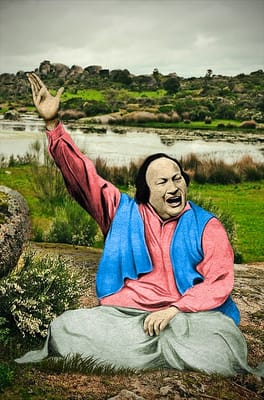
Photo: Attersaab / CC BY-SA 4.0 (source: Wikimedia Commons)
Nusrat Fateh Ali Khan, born on October 13, 1948 in Faisalabad, Faisalabad District, Pakistan, was a singer, composer and music educator. Nusrat Fateh Ali Khan died on August 16, 1997, aged 48. Recorded honors include Pride of Performance, Nigar Awards, Fukuoka Asian Culture Prize (1996) and 1 more.
My Take
Nusrat Fateh Ali Khan is, simply put, one of the greatest voices the world has ever produced. As the Shahanshah-e-Qawwali, he took Sufi devotional music far beyond South Asia, collaborating with Peter Gabriel and Western artists while never diluting his roots. What moves me is that you don't need to understand the words; his voice reaches the soul directly. Japan honored him with the Fukuoka Asian Culture Prize in 1996, recognition he richly deserved. Losing him at just 48 in 1997 robbed music of decades more genius. Every time I listen, I'm reminded that singing, at its highest, is prayer made audible.
This take was written by generative AI, one per person, from publicly reported facts (editorial policy). It is a reading of the record, not reporting.
1. Profile
- Name (English)
- Nusrat Fateh Ali Khan
- Name (Japanese)
- ヌスラト・ファテー・アリー・ハーン
- Reading
- ぬすらと・ふぁてー・ありー・はーん
- Born
- October 13, 1948 – August 16, 1997
- Origin
- Faisalabad, Faisalabad District, Pakistan
- Occupation
- singer / composer / music educator / storyteller / recording artist
- Zodiac / Chinese zodiac
- Libra / Rat
2. Background
Awards & achievements
- Pride of Performance
- Nigar Awards
- 1996 Fukuoka Asian Culture Prize
- Lux Style Awards
3. Links
- Wikipedia (English)https://en.wikipedia.org/wiki/Nusrat%20Fateh%20Ali%20Khan
- Wikipedia (Japanese)https://ja.wikipedia.org/wiki/%E3%83%8C%E3%82%B9%E3%83%A9%E3%83%88%E3%83%BB%E3%83%95%E3%82%A1%E3%83%86%E3%83%BC%E3%83%BB%E3%82%A2%E3%83%AA%E3%83%BC%E3%83%BB%E3%83%8F%E3%83%BC%E3%83%B3
- Wikidatahttps://www.wikidata.org/wiki/Q299073
4. About this entry
Tags
- Last updated
Facts are limited to publicly available information up to 2024; non-public or unconfirmed items are omitted. English text is machine-assisted (facts translated by Sonnet, "My Take" written by Opus 4.8). The Japanese page is the source of record.
Frequently asked questions
When was Nusrat Fateh Ali Khan born?
Nusrat Fateh Ali Khan was born on October 13, 1948.
When did Nusrat Fateh Ali Khan die?
Nusrat Fateh Ali Khan died on August 16, 1997, aged 48.
Where was Nusrat Fateh Ali Khan from?
Nusrat Fateh Ali Khan was from Faisalabad, Faisalabad District, Pakistan.
What did Nusrat Fateh Ali Khan do?
Nusrat Fateh Ali Khan worked as singer, composer, music educator, storyteller, recording artist.
Singer — see all → · Composer — see all → · More people from Pakistan → · More people born on October 13 →