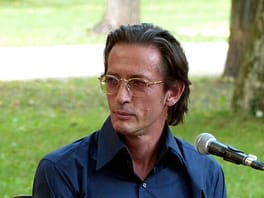
Photo: manfred.sause@volloeko.de / CC BY-SA 3.0 (source: Wikimedia Commons)
Oskar Roehler is a film director, screenwriter and writer. Oskar Roehler was born in Starnberg, Upper Bavaria, Germany on January 21, 1959. That works out to 67 years old in 2026.
My Take
Oskar Roehler fascinates me because storytelling was practically in his bloodstream, raised as he was by two writers, Gisela Elsner and Klaus Roehler. What I find most telling is his trajectory: a screenwriter from the mid-1980s who stepped behind the camera himself in the early 1990s. The move from giving words to other directors to directing your own vision suggests someone with an urgent need to say something on his own terms. German cinema has a particular astringent, uncompromising quality, and a writer-turned-director who also works as a journalist tends to bring real intellectual bite. I'd happily lose an evening to his filmography.
This take was written by generative AI, one per person, from publicly reported facts (editorial policy). It is a reading of the record, not reporting.
1. Profile
- Name (English)
- Oskar Roehler
- Name (Japanese)
- オスカー・レーラー
- Reading
- おすかー・れーらー
- Born
- January 21, 1959 (age 67)
- Origin
- Starnberg, Upper Bavaria, Germany
- Occupation
- film director / screenwriter / writer / journalist / director
- Zodiac / Chinese zodiac
- Aquarius / Boar
2. Links
3. About this entry
Tags
- Last updated
Facts are limited to publicly available information up to 2024; non-public or unconfirmed items are omitted. English text is machine-assisted (facts translated by Sonnet, "My Take" written by Opus 4.8). The Japanese page is the source of record.
Frequently asked questions
When was Oskar Roehler born?
Born January 21, 1959 (age 67).
Where is Oskar Roehler from?
Oskar Roehler is from Starnberg, Upper Bavaria, Germany.
What does Oskar Roehler do?
Oskar Roehler works as film director, screenwriter, writer, journalist, director.
Film director — see all → · Screenwriter — see all → · More people from Germany →