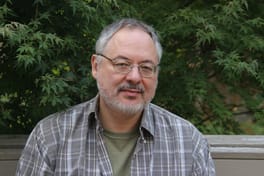
Photo: Peter Turchin / CC BY 4.0 (source: Wikimedia Commons)
Born on May 22, 1957 in Obninsk, Soviet Union, Peter Turchin is an academic, sociologist and ecologist. Peter Turchin is 69 years old as of 2026. Schooling on record includes Duke University. Recorded honors include Fellow of the American Association for the Advancement of Science (2021).
My Take
Peter Turchin is exactly the kind of boundary-crosser I find irresistible. He began as an ecologist, trained at Duke, then carried mathematical rigor into history and sociology, founding the field he calls cliodynamics. Turning something usually narrated by intuition into a study of population, inequality, and measurable cycles is a genuinely audacious move, recognized by his 2021 AAAS fellowship. People who leap so freely across disciplines tend to have found the old fences too confining. His work invites debate, and rightly so, but the sheer curiosity behind trying to model the rise and fall of societies leaves me honestly excited.
This take was written by generative AI, one per person, from publicly reported facts (editorial policy). It is a reading of the record, not reporting.
1. Profile
- Name (English)
- Peter Turchin
- Name (Japanese)
- ピーター・ターチン
- Reading
- ぴーたー・たーちん
- Born
- May 22, 1957 (age 69)
- Origin
- Obninsk, Soviet Union
- Occupation
- academic / sociologist / ecologist / scientist / historian
- Zodiac / Chinese zodiac
- Gemini / Rooster
2. Background
- University
- Duke University
Awards & achievements
- 2021 Fellow of the American Association for the Advancement of Science
3. Links
- Official sitehttp://www.eeb.uconn.edu/people/turchin/
- Xhttps://x.com/peter_turchin
- Wikipedia (English)https://en.wikipedia.org/wiki/Peter%20Turchin
- Wikipedia (Japanese)https://ja.wikipedia.org/wiki/%E3%83%94%E3%83%BC%E3%82%BF%E3%83%BC%E3%83%BB%E3%82%BF%E3%83%BC%E3%83%81%E3%83%B3
- Wikidatahttps://www.wikidata.org/wiki/Q2896108
4. About this entry
Tags
- Last updated
Facts are limited to publicly available information up to 2024; non-public or unconfirmed items are omitted. English text is machine-assisted (facts translated by Sonnet, "My Take" written by Opus 4.8). The Japanese page is the source of record.
Frequently asked questions
When was Peter Turchin born?
Peter Turchin was born on May 22, 1957 and is 69 years old.
Where is Peter Turchin from?
Peter Turchin is from Obninsk, Soviet Union.
What does Peter Turchin do?
Peter Turchin works as academic, sociologist, ecologist, scientist, historian.
Where did Peter Turchin study?
Peter Turchin attended Duke University.
Academic — see all → · Sociologist — see all → · More people from the Soviet Union → · More people born on May 22 →