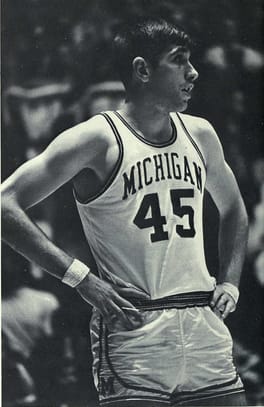
Photo: Unidentified (Ensian published by University of Michigan) / Public domain (source: Wikimedia Commons)
Born on November 24, 1948, Rudy Tomjanovich is from Hamtramck, Michigan, United States. Public records list Rudy Tomjanovich as a basketball player and basketball coach. That works out to 77 years old in 2026. Education on record includes Hamtramck High School and University of Michigan. The listed height is 203 cm.
My Take
Rudy Tomjanovich is one of those rare figures who reached the summit twice, as player and as coach. A Hamtramck kid out of Michigan who spent his entire playing career with the Rockets, then guided them to back-to-back titles in 1994 and 1995 and led Team USA to gold in 2000. What moves me most is his loyalty, an entire life poured into one franchise. He embodies a vanishing ideal in modern sports, where stars chase rings across rosters. His famous line about never underestimating the heart of a champion sums up a man who understood that grit, not glamour, builds dynasties.
This take was written by generative AI, one per person, from publicly reported facts (editorial policy). It is a reading of the record, not reporting.
1. Profile
- Name (English)
- Rudy Tomjanovich
- Name (Japanese)
- ルディ・トムジャノビッチ
- Reading
- るでぃ・とむじゃのびっち
- Born
- November 24, 1948 (age 77)
- Origin
- Hamtramck, Michigan, United States
- Height
- 203 cm
- Occupation
- basketball player / basketball coach
- Zodiac / Chinese zodiac
- Sagittarius / Rat
2. Background
- High school
- Hamtramck High School
- University
- University of Michigan
3. Links
4. About this entry
Tags
- Last updated
Facts are limited to publicly available information up to 2024; non-public or unconfirmed items are omitted. English text is machine-assisted (facts translated by Sonnet, "My Take" written by Opus 4.8). The Japanese page is the source of record.
Frequently asked questions
When was Rudy Tomjanovich born?
Born November 24, 1948 (age 77).
Where is Rudy Tomjanovich from?
Rudy Tomjanovich is from Hamtramck, Michigan, United States.
What does Rudy Tomjanovich do?
Rudy Tomjanovich works as basketball player, basketball coach.
How tall is Rudy Tomjanovich?
Rudy Tomjanovich is 203 cm.
Basketball player — see all → · Basketball coach — see all → · More people from the United States →