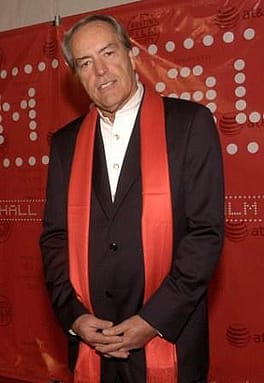
Photo: Jane Boursaw, for [1] / CC BY-SA 3.0 (source: Wikimedia Commons)
Powers Boothe was born on June 1, 1948 in Snyder, Texas, United States. Powers Boothe was listed as an art collector, voice actor and film actor. Death is recorded on May 14, 2017, at the age of 68. Schooling on record includes Snyder High School and Texas State University. Listed accolades include Golden Boot Awards (2006) and Primetime Emmy Award for Outstanding Lead Actor in a Miniseries or a Movie (1980).
My Take
Powers Boothe had one of those faces and voices that command a scene the instant he appears, and I treasure character actors of that caliber. His 1980 Emmy win for playing Jim Jones signaled early that he could inhabit dangerous, morally complex men without flinching. Whether anchoring an ensemble or stealing a single scene, he tilted the screen's center of gravity toward himself. The Texas grit in his delivery felt entirely lived-in. His passing in 2017 was a real loss, but between his film work and voice roles, he remains, in my book, a heavyweight among supporting players.
This take was written by generative AI, one per person, from publicly reported facts (editorial policy). It is a reading of the record, not reporting.
1. Profile
- Name (English)
- Powers Boothe
- Name (Japanese)
- パワーズ・ブース
- Reading
- ぱわーず・ぶーす
- Born
- June 1, 1948 – May 14, 2017
- Origin
- Snyder, Texas, United States
- Occupation
- art collector / voice actor / film actor / stage actor / television actor
- Zodiac / Chinese zodiac
- Gemini / Rat
2. Background
- High school
- Snyder High School
- University
- Texas State University
Awards & achievements
- 2006 Golden Boot Awards
- 1980 Primetime Emmy Award for Outstanding Lead Actor in a Miniseries or a Movie
3. Links
- Wikipedia (English)https://en.wikipedia.org/wiki/Powers%20Boothe
- Wikipedia (Japanese)https://ja.wikipedia.org/wiki/%E3%83%91%E3%83%AF%E3%83%BC%E3%82%BA%E3%83%BB%E3%83%96%E3%83%BC%E3%82%B9
- Wikidatahttps://www.wikidata.org/wiki/Q503027
4. About this entry
Tags
- Last updated
Facts are limited to publicly available information up to 2024; non-public or unconfirmed items are omitted. English text is machine-assisted (facts translated by Sonnet, "My Take" written by Opus 4.8). The Japanese page is the source of record.
Frequently asked questions
When was Powers Boothe born?
Powers Boothe was born on June 1, 1948.
When did Powers Boothe die?
Powers Boothe died on May 14, 2017, aged 68.
Where was Powers Boothe from?
Powers Boothe was from Snyder, Texas, United States.
What did Powers Boothe do?
Powers Boothe worked as art collector, voice actor, film actor, stage actor, television actor.
Where did Powers Boothe study?
Powers Boothe attended Texas State University.
Art collector — see all → · Voice actor — see all → · More people from the United States → · More people born on June 1 →