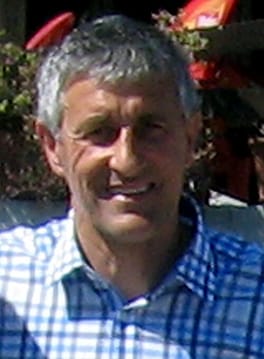
Photo: Doxcumenta / CC0 (source: Wikimedia Commons)
Born on September 27, 1958 in Santander, Cantabria, Spain, Quique Setién is an association football player, association football coach and chess player. As of 2026, Quique Setién is 68 years old. The listed height is 183 cm.
My Take
Quique Setien is one of football's true romantics, a manager who would rather lose beautifully than win ugly. Born in Santander in 1958, he spent the bulk of a 19-year playing career at Racing de Santander, where they nicknamed him El Maestro, and he's also a serious chess player, which tells you everything about how his mind works. His possession-obsessed philosophy made Real Betis a joy to watch before he took the Barcelona job. That spell was star-crossed, but I still rate his convictions. In an era of pragmatism, his stubborn devotion to attacking football is something I quietly cheer for.
This take was written by generative AI, one per person, from publicly reported facts (editorial policy). It is a reading of the record, not reporting.
1. Profile
- Name (English)
- Quique Setién
- Name (Japanese)
- キケ・セティエン
- Reading
- きけ・せてぃえん
- Born
- September 27, 1958 (age 68)
- Origin
- Santander, Cantabria, Spain
- Height
- 183 cm
- Occupation
- association football player / association football coach / chess player / beach soccer player
- Zodiac / Chinese zodiac
- Libra / Dog
2. Links
3. About this entry
Tags
- Last updated
Facts are limited to publicly available information up to 2024; non-public or unconfirmed items are omitted. English text is machine-assisted (facts translated by Sonnet, "My Take" written by Opus 4.8). The Japanese page is the source of record.
Frequently asked questions
When was Quique Setién born?
Quique Setién was born on September 27, 1958 and is 68 years old.
Where is Quique Setién from?
Quique Setién is from Santander, Cantabria, Spain.
What does Quique Setién do?
Quique Setién works as association football player, association football coach, chess player, beach soccer player.
How tall is Quique Setién?
Quique Setién is 183 cm tall.
Association football player — see all → · Association football coach — see all → · More people from Spain → · More people born on September 27 →