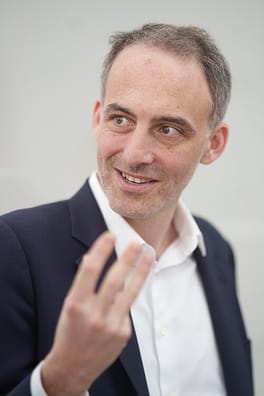
Photo: Mathieu Delmestre / Public domain (source: Wikimedia Commons)
Raphaël Glucksmann, born on October 15, 1979 in Boulogne-Billancourt, Seine, France, is a journalist, non-fiction writer and politician. Raphaël Glucksmann is 47 years old as of 2026. Listed accolades include Chevalier des Arts et des Lettres (2016) and Presidential Order of Excellence.
My Take
Raphaël Glucksmann interests me because he refused to stay on the sidelines. He began as a journalist and documentary maker, trained at the elite Lycée Henri-IV, then crossed the line many writers fear to cross and entered the European Parliament himself. That move from commentary to accountability is what I admire. It is easy to critique power from a desk; it is far harder to seek a mandate and own the consequences. He is divisive, certainly, and I don't expect everyone to share his politics. But the courage to translate conviction into action, with skin in the game, is a quality I value regardless of where one stands.
This take was written by generative AI, one per person, from publicly reported facts (editorial policy). It is a reading of the record, not reporting.
1. Profile
- Name (English)
- Raphaël Glucksmann
- Name (Japanese)
- ラファエル・グリュックスマン
- Reading
- らふぁえる・ぐりゅっくすまん
- Born
- October 15, 1979 (age 47)
- Origin
- Boulogne-Billancourt, Seine, France
- Occupation
- journalist / non-fiction writer / politician / documentalist / political scientist
- Zodiac / Chinese zodiac
- Libra / Goat
2. Background
Awards & achievements
- 2016 Chevalier des Arts et des Lettres
- Presidential Order of Excellence
3. Links
4. About this entry
Tags
- Last updated
Facts are limited to publicly available information up to 2024; non-public or unconfirmed items are omitted. English text is machine-assisted (facts translated by Sonnet, "My Take" written by Opus 4.8). The Japanese page is the source of record.
Frequently asked questions
When was Raphaël Glucksmann born?
Raphaël Glucksmann was born on October 15, 1979 and is 47 years old.
Where is Raphaël Glucksmann from?
Raphaël Glucksmann is from Boulogne-Billancourt, Seine, France.
What does Raphaël Glucksmann do?
Raphaël Glucksmann works as journalist, non-fiction writer, politician, documentalist, political scientist.
Journalist — see all → · Non-fiction writer — see all → · More people from France → · More people born on October 15 →