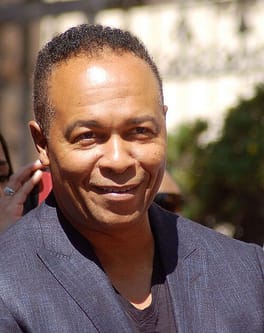
Photo: Angela George / CC BY-SA 3.0 (source: Wikimedia Commons)
Ray Parker Jr. is a songwriter, guitarist and record producer. Ray Parker Jr. was born in Detroit, Michigan, United States on May 1, 1954. The age as of 2026 is 72. Schooling on record includes Northwestern High School. Recorded honors include star on Hollywood Walk of Fame.
My Take
Ray Parker Jr. is one of those guys who could have had a perfectly respectable career as a session guitarist and R&B hitmaker — and then he wrote Ghostbusters, and suddenly the whole world knew his name. Growing up in Detroit, he was playing on Motown sessions as a teenager, which tells you everything about the kind of instincts this man has. "The Other Woman" from 1982 is an underrated gem that proves he had serious pop chops before the supernatural hook came along. But honestly, that Ghostbusters theme is a genuine piece of pop genius — infectious, funky, and so locked into the cultural moment that it still sounds cool forty years later. A Hollywood Walk of Fame star is well earned for a songwriter who gave the world one of the most recognizable hooks ever recorded.
This take was written by generative AI, one per person, from publicly reported facts (editorial policy). It is a reading of the record, not reporting.
1. Profile
- Name (English)
- Ray Parker Jr.
- Name (Japanese)
- レイ・パーカー・ジュニア
- Reading
- れい・ぱーかー・じゅにあ
- Born
- May 1, 1954 (age 72)
- Origin
- Detroit, Michigan, United States
- Occupation
- songwriter / guitarist / record producer / bandleader / composer
- Zodiac / Chinese zodiac
- Taurus / Horse
2. Background
- High school
- Northwestern High School
Awards & achievements
- star on Hollywood Walk of Fame
3. Links
- Official sitehttp://www.rayparkerjr.com
- Instagramhttps://www.instagram.com/rayparkerjr/
- Wikipedia (English)https://en.wikipedia.org/wiki/Ray%20Parker%20Jr.
- Wikipedia (Japanese)https://ja.wikipedia.org/wiki/%E3%83%AC%E3%82%A4%E3%83%BB%E3%83%91%E3%83%BC%E3%82%AB%E3%83%BC%E3%83%BB%E3%82%B8%E3%83%A5%E3%83%8B%E3%82%A2
- Wikidatahttps://www.wikidata.org/wiki/Q381022
4. About this entry
Tags
- Last updated
Only publicly available facts are listed; non-public or unconfirmed items are omitted. Base data was compiled from Wikidata from June 2026 onward; ages are recalculated daily and deaths are checked against Wikidata on an ongoing basis. English text is machine-assisted (facts translated by Sonnet, "My Take" written by Opus 4.8). The Japanese page is the source of record.
Frequently asked questions
When was Ray Parker Jr. born?
Ray Parker Jr. was born on May 1, 1954 and is 72 years old.
Where is Ray Parker Jr. from?
Ray Parker Jr. is from Detroit, Michigan, United States.
What does Ray Parker Jr. do?
Ray Parker Jr. works as songwriter, guitarist, record producer, bandleader, composer.
Which high school did Ray Parker Jr. attend?
Ray Parker Jr. attended Northwestern High School.
Songwriter — see all → · Guitarist — see all → · More people from the United States → · More people born on May 1 →