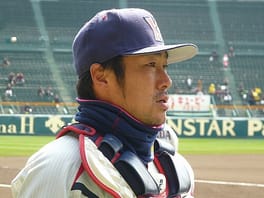
Photo: Cake6 (talk) / CC BY-SA 4.0 (source: Wikimedia Commons)
My Take
Ryoji Aikawa is exactly the kind of player that casual fans overlook and baseball lifers quietly respect — a big, 183 cm catcher from Ichikawa, Chiba who built his career doing the unglamorous stuff right. Catchers don't get the highlight reels; they get sore knees, a face full of foul tips, and the constant mental load of managing an entire pitching staff. Aikawa wore that burden well. There's a particular intelligence required to crouch behind home plate for years, read hitters, calm down a rattled pitcher in the fourth inning, and keep a clubhouse grounded — and from everything I know about his reputation, that was his game. Not flashy, not famous outside hardcore NPB circles, but absolutely the kind of presence that makes a roster feel like a real team.
This take was written by generative AI, one per person, from publicly reported facts (editorial policy). It is a reading of the record, not reporting.
Story
The Anchor Behind the Plate: Ryoji Aikawa and the Quiet Craft of Catching
Overview
Ryoji Aikawa is a Japanese former professional baseball player and current manager of the Yokohama DeNA BayStars, born on July 11, 1976, in Ichikawa, Chiba Prefecture. He stands 183 cm tall and attended Tokyo Gakukan High School. He is known as a catcher whose experience and steadying presence behind the plate made him a key figure in team dynamics.
1. Profile
- Name (English)
- Ryoji Aikawa
- Name (Japanese)
- 相川亮二
- Reading
- あいかわ りょうじ
- Born
- July 11, 1976 (age 50)
- Origin
- Ichikawa, Chiba Prefecture, Japan
- Height
- 183cm
- Occupation
- Baseball Player
- Zodiac / Chinese zodiac
- Cancer / Dragon
2. Background
- High school
- Tokyo Gakukan High School
3. Links
- Wikipedia (Japanese)https://ja.wikipedia.org/wiki/%E7%9B%B8%E5%B7%9D%E4%BA%AE%E4%BA%8C
- Wikidatahttps://www.wikidata.org/wiki/Q1038030
4. About this entry
Tags
- Last updated
Only publicly available facts are listed; non-public or unconfirmed items are omitted. Base data was compiled from Wikidata from June 2026 onward; ages are recalculated daily and deaths are checked against Wikidata on an ongoing basis. English text is machine-assisted (facts translated by Sonnet, "My Take" written by Opus 4.8). The Japanese page is the source of record.
Frequently asked questions
When was Ryoji Aikawa born?
Ryoji Aikawa was born on July 11, 1976 and is 50 years old.
Where is Ryoji Aikawa from?
Ryoji Aikawa is from Ichikawa, Chiba Prefecture, Japan.
What does Ryoji Aikawa do?
Ryoji Aikawa works as Baseball Player.
How tall is Ryoji Aikawa?
Ryoji Aikawa is 183 cm tall.
Which high school did Ryoji Aikawa attend?
Ryoji Aikawa attended Tokyo Gakukan High School.
Baseball Player — see all → · More people from Japan → · More people born on July 11 →