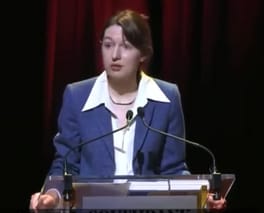
Photo: Frank Barat / CC BY 4.0 (source: Wikimedia Commons)
Sally Rooney is listed as a novelist, film screenwriter and film producer. Sally Rooney was born on February 20, 1991 in Castlebar, County Mayo, Ireland. That works out to 35 years old in 2026. Education on record includes Trinity College, Dublin. Recorded honors include Costa Book Award for Novel (2018), Encore Award (2019) and Time 100 (2022).
My Take
Sally Rooney is, for my money, the sharpest chronicler of intimacy and loneliness among writers of her generation. Normal People and Conversations with Friends made her a phenomenon, but the real achievement is that spare, watchful prose that captures how young people fumble toward connection. Trinity College and the quiet of County Mayo seem to live in the introspection of her work. Being named to the Time 100 in her early thirties is striking, yet what draws me in isn't the acclaim, it's her willingness to sit with silence and let characters be inarticulate. Intermezzo confirmed she doesn't miss.
This take was written by generative AI, one per person, from publicly reported facts (editorial policy). It is a reading of the record, not reporting.
1. Profile
- Name (English)
- Sally Rooney
- Name (Japanese)
- サリー・ルーニー
- Reading
- さりー・るーにー
- Born
- February 20, 1991 (age 35)
- Origin
- Castlebar, County Mayo, Ireland
- Occupation
- novelist / film screenwriter / film producer / writer
- Zodiac / Chinese zodiac
- Pisces / Goat
2. Background
- University
- Trinity College, Dublin
Awards & achievements
- 2018 Costa Book Award for Novel
- 2019 Encore Award
- 2022 Time 100
3. Works & records
Filmography / notable works
| Category | Title |
|---|---|
| Notable work | Conversations with Friends |
| Notable work | Normal People |
| Notable work | Beautiful World, Where Are You |
| Notable work | Intermezzo |
4. Links
- Wikipedia (English)https://en.wikipedia.org/wiki/Sally%20Rooney
- Wikipedia (Japanese)https://ja.wikipedia.org/wiki/%E3%82%B5%E3%83%AA%E3%83%BC%E3%83%BB%E3%83%AB%E3%83%BC%E3%83%8B%E3%83%BC
- Wikidatahttps://www.wikidata.org/wiki/Q54861296
5. About this entry
Tags
- Last updated
Facts are limited to publicly available information up to 2024; non-public or unconfirmed items are omitted. English text is machine-assisted (facts translated by Sonnet, "My Take" written by Opus 4.8). The Japanese page is the source of record.
Frequently asked questions
When was Sally Rooney born?
Born February 20, 1991 (age 35).
Where is Sally Rooney from?
Sally Rooney is from Castlebar, County Mayo, Ireland.
What does Sally Rooney do?
Sally Rooney works as novelist, film screenwriter, film producer, writer.
What is Sally Rooney known for?
Notable works include Conversations with Friends, Normal People, Beautiful World, Where Are You.
Novelist — see all → · Film screenwriter — see all → · More people from Ireland →