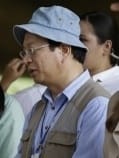
Photo: Embassy of Japan in Honduras / CC BY 4.0 (source: Wikimedia Commons)
My Take
There's something quietly compelling about a person whose whole career is literally digging up the past. Seiichi Nakamura — archaeologist and educator out of Kofu, Yamanashi — is exactly the kind of figure who doesn't trend on social media but absolutely should. He studied at Kanazawa University, which has one of Japan's stronger archaeology programs, and built a life around excavation and teaching. Born in 1958, he came of age during Japan's postwar economic boom, a time when the country was simultaneously bulldozing its past to build highways and discovering extraordinary ancient sites underneath. I imagine him as the guy who shows up before anyone else, brushes dirt off a shard of pottery, and feels genuinely thrilled. That combination of fieldwork and classroom — passing real knowledge to the next generation — is a kind of legacy most people never manage. Respect.
This take was written by generative AI, one per person, from publicly reported facts (editorial policy). It is a reading of the record, not reporting.
Overview
Seiichi Nakamura is a Japanese archaeologist and educator born in 1958 in Kofu, Yamanashi Prefecture. He studied at Kanazawa University. He is associated with the fields of archaeology and teaching, representing a career dedicated to uncovering and conveying historical knowledge.
1. Profile
- Name (English)
- Seiichi Nakamura
- Name (Japanese)
- 中村誠一
- Reading
- なかむら せいいち
- Born
- 1958
- Origin
- Kofu, Yamanashi Prefecture, Japan
- Occupation
- Archaeologist / Educator
- Zodiac / Chinese zodiac
- Dog
2. Background
- University
- Kanazawa University
3. Links
4. About this entry
Tags
- Last updated
Facts are limited to publicly available information up to 2024; non-public or unconfirmed items are omitted. English text is machine-assisted (facts translated by Sonnet, "My Take" written by Opus 4.8). The Japanese page is the source of record.
Frequently asked questions
Where is Seiichi Nakamura from?
Seiichi Nakamura is from Kofu, Yamanashi Prefecture, Japan.
What does Seiichi Nakamura do?
Seiichi Nakamura works as Archaeologist, Educator.