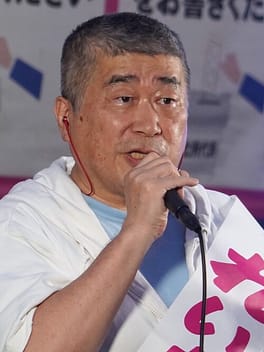
Photo: Noukei314 / CC BY 4.0 (source: Wikimedia Commons)
My Take
Okay, I love a person whose resume refuses to sit still. Kenji Isezaki reads like four people sharing one body: the Waseda-trained engineer's brain, the academic, the guy who actually went into conflict zones to do disarmament and peacebuilding work, and then, almost as a punchline, a jazz trumpet player. That last line is what gets me. You spend your career in some of the most dangerous, mud-and-gunpowder corners of the planet, doing the unglamorous arithmetic of getting people to put weapons down, and then at night you pick up a horn? That is not a hobby, that is a whole second nervous system. A Tokyo kid who chose the world's hardest rooms. I have a real soft spot for grown-ups who can't be filed under one tab, and he's the patron saint of that.
This take was written by generative AI, one per person, from publicly reported facts (editorial policy). It is a reading of the record, not reporting.
Overview
Kenji Isezaki (born July 6, 1957, in Tokyo) is a Japanese academic, disarmament specialist, and politician known for his work in conflict zones around the world. He studied at the Faculty of Science and Engineering at Waseda University and later became a professor, combining scholarly work with direct engagement in peace-building and disarmament efforts. He is also known as an amateur trumpet player.
1. Profile
- Name (English)
- Kenji Isezaki
- Name (Japanese)
- 伊勢崎賢治
- Reading
- いせざき けんじ
- Born
- July 6, 1957 (age 69)
- Origin
- Tokyo, Japan
- Occupation
- Educator / Politician / Trumpet Player / Scientist
- Zodiac / Chinese zodiac
- Cancer / Rooster
2. Background
- High school
- Tokyo Metropolitan Tachikawa High School
- University
- Waseda University, Faculty of Science and Engineering
3. Links
4. About this entry
Tags
- Last updated
Facts are limited to publicly available information up to 2024; non-public or unconfirmed items are omitted. English text is machine-assisted (facts translated by Sonnet, "My Take" written by Opus 4.8). The Japanese page is the source of record.
Frequently asked questions
When was Kenji Isezaki born?
Born July 6, 1957 (age 69).
Where is Kenji Isezaki from?
Kenji Isezaki is from Tokyo, Japan.
What does Kenji Isezaki do?
Kenji Isezaki works as Educator, Politician, Trumpet Player, Scientist.
Educator — see all → · Politician — see all → · More people from Japan →