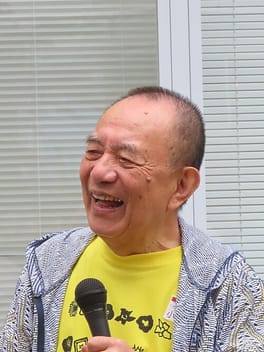
Photo: 運動会プロテインパワー / CC BY-SA 4.0 (source: Wikimedia Commons)
My Take
For me, Koyūza San'yūtei is one of those faces that just means "Sunday evening," that warm, slightly mischievous fixture from the long-running comedy panel show Shōten, lobbing out cheeky thief gags and a little playful innuendo with that sly, narrow-eyed grin. What I love is the contrast: here's a Meiji University grad from Ōtsuki in Yamanashi, clearly a sharp guy, who happily plays the loveable rascal instead. That's confidence. As a rakugo storyteller he's got the real Edo-style lightness and timing too, not just TV charm, and I think that craft is exactly why he's stayed in living rooms for decades. Honestly, he reads like someone who simply loves making people laugh, and that warmth is infectious every single time.
This take was written by generative AI, one per person, from publicly reported facts (editorial policy). It is a reading of the record, not reporting.
Overview
Koyūza San'yūtei is a Japanese rakugo performer and singer born on March 2, 1947, in Otsuki, Yamanashi Prefecture. He studied at Yamanashi Prefectural Tsuru High School before graduating from Meiji University. A long-running cast member of the popular Sunday television program Shoten, he is widely known for his easygoing and witty stage presence. He is also active as a singer alongside his rakugo career.
1. Profile
- Name (English)
- Koyūza San'yūtei
- Name (Japanese)
- 三遊亭小遊三
- Reading
- さんゆうてい こゆうざ
- Born
- March 2, 1947 (age 79)
- Origin
- Otsuki, Yamanashi Prefecture, Japan
- Height
- 165cm
- Occupation
- Rakugo Performer / Singer
- Zodiac / Chinese zodiac
- Pisces / Boar
- Agency
- 大有企画(マネジメント)
- Active years
- 1968 -
2. Background
- High school
- Yamanashi Prefectural Tsuru High School
- University
- Meiji University
3. Works & records
Works summary
- Appearances
- 19 (1980–2024)
- By year
- 1980: 1, 1981: 1, 1983: 1, 1984: 3, 1987: 2, 1989: 1, 1993: 1, 1996: 1, 2006: 2, 2018: 2, 2019: 1, 2021: 1, 2024: 1
- Debut work
- キリンあしたのカレンダー
Filmography / notable works
| Category | Title | Role | Year |
|---|---|---|---|
| TV drama | 大河ドラマ 光る君へ 第2話・第3話 | 2024 | |
| CM | 被災の声を、日々の備えに。 | 2021 | |
| TV drama | 集団左遷!! 第2話・第5話 | 2019 | |
| TV drama | 義母と娘のブルース 第2話 | 2018 | |
| TV drama | 江戸前の旬 | 2018 | |
| TV program | 落語をもっと楽しもう | as 案内 | 2006 |
| Radio program | ミュージックプレゼント | 2006 | |
| Serialization | ダジャレ四季報366日 | 1996 | |
| Serialization | 三遊亭小遊三の全日本ダジャレ芸術協会 | 1993 | |
| Film | 226 | 1989 | |
| TV program | マル金ギャハハ倶楽部 | 1987 | |
| Radio program | 小遊三いきいき大放送 | 1987 | |
| TV program | 人気怪獣大パレード | 1984 | |
| TV program | 派手〜ずナイト | 1984 | |
| Film | お葬式 予告編 | 1984 | |
| TV program | 笑点 | 1983 | |
| TV program | らくごin六本木 | 1981 | |
| Anime | キリンあしたのカレンダー | 1980 | |
| TV program | オレたちひょうきん族 |
4. Links
5. About this entry
Tags
- Last updated
Facts are limited to publicly available information up to 2024; non-public or unconfirmed items are omitted. Works and profile fields sourced from Wikipedia reflect content as of 2026-08-26. English text is machine-assisted (facts translated by Sonnet, "My Take" written by Opus 4.8). The Japanese page is the source of record.
Frequently asked questions
When was Koyūza San'yūtei born?
Born March 2, 1947 (age 79).
Where is Koyūza San'yūtei from?
Koyūza San'yūtei is from Otsuki, Yamanashi Prefecture, Japan.
What does Koyūza San'yūtei do?
Koyūza San'yūtei works as Rakugo Performer, Singer.
How tall is Koyūza San'yūtei?
Koyūza San'yūtei is 165 cm.
What agency is Koyūza San'yūtei with?
Koyūza San'yūtei is with 大有企画(マネジメント).
How long has Koyūza San'yūtei been active?
1968 -.
What is Koyūza San'yūtei known for?
Notable works include 大河ドラマ 光る君へ 第2話・第3話, 被災の声を、日々の備えに。, 集団左遷!! 第2話・第5話.