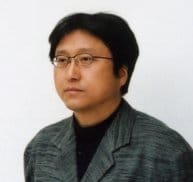
Photo: Bouarifi / CC BY-SA 3.0 (source: Wikimedia Commons)
My Take
Shūhei Endō is the kind of architect who makes you rethink what a building is allowed to feel like. Growing up in Shiga — that quieter, lake-country side of the Kansai region — and then studying at Kyoto City University of Arts, he came to architecture through an artistic lens rather than a purely structural one, and it shows. He's best known internationally for his "Springtecture" series, those sinuous, looping shells of corrugated steel that seem to grow out of the ground rather than sit on it. There's something almost contradictory about the work: industrial material, sensuous form. Born in 1960 and still active, he belongs to a generation of Japanese architects who quietly redefined what modest, material-honest design could do. I'm not an architecture person by training, but his buildings are the type you stumble across in a photo and think — wait, who built that, and why does corrugated metal look beautiful right now?
This take was written by generative AI, one per person, from publicly reported facts (editorial policy). It is a reading of the record, not reporting.
Overview
Shuhei Endo is a Japanese architect born on January 27, 1960, in Shiga Prefecture. He studied at the Kyoto City University of Arts, where he developed his foundation in architecture with an emphasis on artistic sensibility. He is known within the field of Japanese contemporary architecture. Further details regarding his agency, active period, and body of works are not publicly disclosed.
1. Profile
- Name (English)
- Shuhei Endo
- Name (Japanese)
- 遠藤秀平
- Reading
- えんどう しゅうへい
- Born
- January 27, 1960 (age 66)
- Origin
- Shiga Prefecture, Japan
- Occupation
- Architect
- Zodiac / Chinese zodiac
- Aquarius / Rat
2. Background
- University
- Kyoto City University of Arts
3. Links
- Wikipedia (Japanese)https://ja.wikipedia.org/wiki/%E9%81%A0%E8%97%A4%E7%A7%80%E5%B9%B3
- Wikidatahttps://www.wikidata.org/wiki/Q3482628
4. About this entry
Tags
- Last updated
Facts are limited to publicly available information up to 2024; non-public or unconfirmed items are omitted. English text is machine-assisted (facts translated by Sonnet, "My Take" written by Opus 4.8). The Japanese page is the source of record.
Frequently asked questions
When was Shuhei Endo born?
Born January 27, 1960 (age 66).
Where is Shuhei Endo from?
Shuhei Endo is from Shiga Prefecture, Japan.
What does Shuhei Endo do?
Shuhei Endo works as Architect.