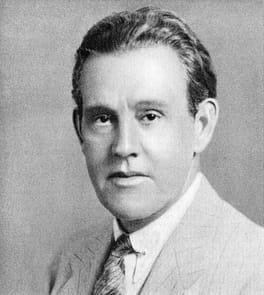
Photo: The Theatre Magazine Company, no photographer credited / Public domain (source: Wikimedia Commons)
Sidney Toler was a screenwriter, stage actor and film actor, born on April 28, 1874 in Warrensburg, Missouri, United States. Sidney Toler died on February 12, 1947 at the age of 72. Education on record includes University of Kansas.
My Take
Sidney Toler fascinates me as a late bloomer who found his defining role in his sixties. A playwright and stage director who left the University of Kansas to act, he became the second non-Asian actor to play Charlie Chan, carrying twenty-two films across nearly a decade. The casting reflects uncomfortable assumptions of its era, and I won't pretend otherwise, yet his craft kept a beloved series alive. I suspect his background as a writer gave him the comic timing and unhurried rhythm the detective needed. To me he represents the dependable character actor whose quiet professionalism, sustained until his death in 1947, deserves remembering.
This take was written by generative AI, one per person, from publicly reported facts (editorial policy). It is a reading of the record, not reporting.
1. Profile
- Name (English)
- Sidney Toler
- Name (Japanese)
- シドニー・トーラー
- Reading
- しどにー・とーらー
- Born
- April 28, 1874 – February 12, 1947
- Origin
- Warrensburg, Missouri, United States
- Occupation
- screenwriter / stage actor / film actor / playwright / writer
- Zodiac / Chinese zodiac
- Taurus / Dog
2. Background
- University
- University of Kansas
3. Links
- Wikipedia (English)https://en.wikipedia.org/wiki/Sidney%20Toler
- Wikidatahttps://www.wikidata.org/wiki/Q3290613
4. About this entry
Tags
- Last updated
Facts are limited to publicly available information up to 2024; non-public or unconfirmed items are omitted. English text is machine-assisted (facts translated by Sonnet, "My Take" written by Opus 4.8). The Japanese page is the source of record.
Frequently asked questions
When was Sidney Toler born?
Sidney Toler was born on April 28, 1874.
When did Sidney Toler die?
Sidney Toler died on February 12, 1947, aged 72.
Where was Sidney Toler from?
Sidney Toler was from Warrensburg, Missouri, United States.
What did Sidney Toler do?
Sidney Toler worked as screenwriter, stage actor, film actor, playwright, writer.
Where did Sidney Toler study?
Sidney Toler attended University of Kansas.
Screenwriter — see all → · Stage actor — see all → · More people from the United States → · More people born on April 28 →