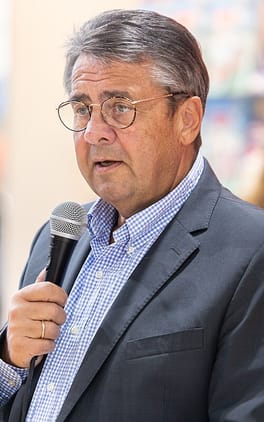
Photo: Martin Kraft / CC BY-SA 3.0 (source: Wikimedia Commons)
Sigmar Gabriel is credited as a politician, non-fiction writer and temporary career soldier. Sigmar Gabriel was born on September 12, 1959 in Goslar, Lower Saxony, Germany. That works out to 67 years old in 2026. Schooling on record includes University of Göttingen. Recorded honors include honorary citizen of Goslar (2018).
My Take
Sigmar Gabriel is one of those German political figures whose longevity tells the story. Leading the Social Democratic Party from 2009 to 2017 made him its longest-serving chairman since Willy Brandt, and that comparison alone signals weight. He served as vice-chancellor and later foreign minister, so he operated at the very top of German government for years. What interests me is the path: a former secondary school teacher from Goslar in Lower Saxony who became a non-fiction author too. Being named an honorary citizen of his hometown in 2018 feels fitting — the local boy who reached the national stage and was claimed back.
This take was written by generative AI, one per person, from publicly reported facts (editorial policy). It is a reading of the record, not reporting.
1. Profile
- Name (English)
- Sigmar Gabriel
- Name (Japanese)
- ジグマール・ガブリエル
- Reading
- じぐまーる・がぶりえる
- Born
- September 12, 1959 (age 67)
- Origin
- Goslar, Lower Saxony, Germany
- Occupation
- politician / non-fiction writer / temporary career soldier / secondary school teacher
- Zodiac / Chinese zodiac
- Virgo / Boar
2. Background
- University
- University of Göttingen
Awards & achievements
- 2018 honorary citizen of Goslar
3. Links
- Official sitehttps://sigmar-gabriel.de
- Xhttps://x.com/sigmargabriel
- Wikipedia (English)https://en.wikipedia.org/wiki/Sigmar%20Gabriel
- Wikipedia (Japanese)https://ja.wikipedia.org/wiki/%E3%82%B8%E3%82%B0%E3%83%9E%E3%83%BC%E3%83%AB%E3%83%BB%E3%82%AC%E3%83%96%E3%83%AA%E3%82%A8%E3%83%AB
- Wikidatahttps://www.wikidata.org/wiki/Q160902
4. About this entry
Tags
- Last updated
Facts are limited to publicly available information up to 2024; non-public or unconfirmed items are omitted. English text is machine-assisted (facts translated by Sonnet, "My Take" written by Opus 4.8). The Japanese page is the source of record.
Frequently asked questions
When was Sigmar Gabriel born?
Born September 12, 1959 (age 67).
Where is Sigmar Gabriel from?
Sigmar Gabriel is from Goslar, Lower Saxony, Germany.
What does Sigmar Gabriel do?
Sigmar Gabriel works as politician, non-fiction writer, temporary career soldier, secondary school teacher.
Politician — see all → · Non-fiction writer — see all → · More people from Germany →