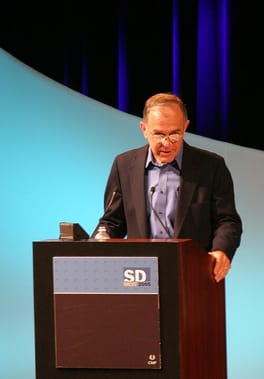
Photo: Unknown author / CC BY-SA 3.0 (source: Wikimedia Commons)
Stephen R. Bourne, born on January 7, 1944, is a computer scientist. As of 2026, Stephen R. Bourne is 82 years old. Education on record includes Trinity College. Recorded honors include ACM Fellow (2005).
My Take
Bourne is one of those names that quietly underpins how the modern computing world actually works. The Bourne shell shaped the way countless developers still interact with Unix systems decades later, and that kind of invisible, foundational influence is exactly what I find most compelling. He never seems to chase the spotlight, yet his fingerprints are on terminals everywhere. An English mind who built his career in America and was recognized as an ACM Fellow in 2005, he represents the rare engineer whose work becomes infrastructure rather than a product. I have enormous respect for builders whose legacy outlasts the hype cycles entirely.
This take was written by generative AI, one per person, from publicly reported facts (editorial policy). It is a reading of the record, not reporting.
1. Profile
- Name (English)
- Stephen R. Bourne
- Name (Japanese)
- スティーブン・ボーン
- Reading
- すてぃーぶん・ぼーん
- Born
- January 7, 1944 (age 82)
- Occupation
- computer scientist
- Zodiac / Chinese zodiac
- Capricorn / Monkey
2. Background
- University
- Trinity College
Awards & achievements
- 2005 ACM Fellow
3. Links
4. About this entry
Tags
- Last updated
Facts are limited to publicly available information up to 2024; non-public or unconfirmed items are omitted. English text is machine-assisted (facts translated by Sonnet, "My Take" written by Opus 4.8). The Japanese page is the source of record.
Frequently asked questions
When was Stephen R. Bourne born?
Born January 7, 1944 (age 82).
What does Stephen R. Bourne do?
Stephen R. Bourne works as computer scientist.