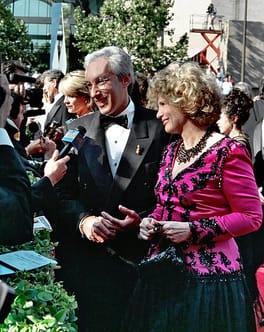
Photo: Alan Light / CC BY 2.0 (source: Wikimedia Commons)
Steven Bochco was a screenwriter, film producer and television producer, born on December 16, 1943 in New York City, New York, United States. Steven Bochco died on April 1, 2018, aged 74. Schooling on record includes High School of Music & Art and Carnegie Mellon University. Listed accolades include Laurel Award for TV Writing Achievement (1994), Edgar Awards (1982), Primetime Emmy Award for Outstanding Drama Series (1981, 1982, 1983, 1984) and 1 more.
My Take
I see Bochco as one of the quiet architects of modern television. Long before prestige drama became a buzzword, his Hill Street Blues, L.A. Law, and NYPD Blue taught American TV how to juggle a dozen storylines and let cops feel like flawed humans. That run of back-to-back Emmys in the early eighties wasn't luck; it was a writer-producer who understood structure better than almost anyone. What impresses me most is durability. He stayed relevant across decades, which is brutally hard in this industry. Every sprawling ensemble crime show today owes him a debt, even if its writers never learned his name.
This take was written by generative AI, one per person, from publicly reported facts (editorial policy). It is a reading of the record, not reporting.
1. Profile
- Name (English)
- Steven Bochco
- Name (Japanese)
- スティーヴン・ボチコー
- Reading
- すてぃーゔん・ぼちこー
- Born
- December 16, 1943 – April 1, 2018
- Origin
- New York City, New York, United States
- Occupation
- screenwriter / film producer / television producer
- Zodiac / Chinese zodiac
- Sagittarius / Goat
2. Background
- High school
- High School of Music & Art
- University
- Carnegie Mellon University
Awards & achievements
- 1994 Laurel Award for TV Writing Achievement
- 1982 Edgar Awards
- 1981 Primetime Emmy Award for Outstanding Drama Series
- 1981 Primetime Emmy Award for Outstanding Writing for a Drama Series
- 1982 Primetime Emmy Award for Outstanding Drama Series
- 1982 Primetime Emmy Award for Outstanding Writing for a Drama Series
- 1983 Primetime Emmy Award for Outstanding Drama Series
- 1984 Primetime Emmy Award for Outstanding Drama Series
3. Links
4. About this entry
Tags
- Last updated
Facts are limited to publicly available information up to 2024; non-public or unconfirmed items are omitted. English text is machine-assisted (facts translated by Sonnet, "My Take" written by Opus 4.8). The Japanese page is the source of record.
Frequently asked questions
When was Steven Bochco born?
Born December 16, 1943.
When did Steven Bochco die?
Died April 1, 2018, aged 74.
Where was Steven Bochco from?
Steven Bochco was from New York City, New York, United States.
What did Steven Bochco do?
Steven Bochco worked as screenwriter, film producer, television producer.
Screenwriter — see all → · Film producer — see all → · More people from the United States →