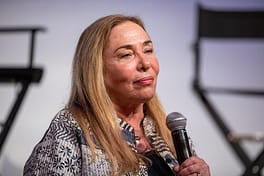
Photo: Moody College of Communication / CC BY-SA 2.0 (source: Wikimedia Commons)
Susan Seidelman was born on December 11, 1952 in Philadelphia, Pennsylvania, United States and is credited as a film director, screenwriter and television director. Susan Seidelman is 73 years old as of 2026. Education on record includes Abington Senior High School and New York University.
My Take
What draws me to Susan Seidelman is how early she was to a sensibility that only became common decades later. Putting female outsiders at the center, blurring comedy and drama, sprinkling pop-culture references with genuine flair, she was doing it confidently in the 1980s when few American directors dared. I admire filmmakers who feel light on the surface but carry a sturdy spine underneath, and that is exactly her register. The Philadelphia roots and NYU training give her work a scrappy, urban honesty I trust. For me she remains one of those underrated voices whose influence is much wider than her name recognition suggests.
This take was written by generative AI, one per person, from publicly reported facts (editorial policy). It is a reading of the record, not reporting.
1. Profile
- Name (English)
- Susan Seidelman
- Name (Japanese)
- スーザン・シーデルマン
- Reading
- すーざん・しーでるまん
- Born
- December 11, 1952 (age 73)
- Origin
- Philadelphia, Pennsylvania, United States
- Occupation
- film director / screenwriter / television director / film producer / film actor
- Zodiac / Chinese zodiac
- Sagittarius / Dragon
2. Background
- High school
- Abington Senior High School
- University
- New York University
3. Links
4. About this entry
Tags
- Last updated
Facts are limited to publicly available information up to 2024; non-public or unconfirmed items are omitted. English text is machine-assisted (facts translated by Sonnet, "My Take" written by Opus 4.8). The Japanese page is the source of record.
Frequently asked questions
When was Susan Seidelman born?
Born December 11, 1952 (age 73).
Where is Susan Seidelman from?
Susan Seidelman is from Philadelphia, Pennsylvania, United States.
What does Susan Seidelman do?
Susan Seidelman works as film director, screenwriter, television director, film producer, film actor.
Film director — see all → · Screenwriter — see all → · More people from the United States →