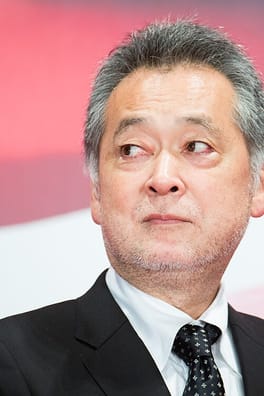
Photo: Dick Thomas Johnson from Tokyo, Japan / CC BY 2.0 (source: Wikimedia Commons)
My Take
Honestly, the first thing that got me about Takahisa Zeze is that this guy graduated from Kyoto University — one of the hardest schools in Japan to get into — and then just walked straight into the grimy, unforgiving world of independent filmmaking. That's not a career pivot, that's a calling. Born in 1960 in Oita and still going strong past sixty, he's the kind of director-writer-sometimes-actor triple threat who never seems to be chasing awards or buzz. His work has that slow-burn, nowhere-to-hide quality where he just plants the camera on the ugliest, most human corners of a scene and refuses to let you look away. Smart enough to know all the tricks, stubborn enough not to use them as shortcuts. A craftsman's craftsman — the sort you only fully appreciate years after you first watch one of his films.
This take was written by generative AI, one per person, from publicly reported facts (editorial policy). It is a reading of the record, not reporting.
Overview
Takahisa Zeze is a Japanese film director, screenwriter, and actor born on May 24, 1960, in Oita Prefecture. A graduate of Kyoto University, he went on to build a career in Japanese cinema spanning multiple creative roles. He is known for an uncompromising, human-focused approach to filmmaking and continues to be active as a director and writer.
1. Profile
- Name (English)
- Takahisa Zeze
- Name (Japanese)
- 瀬々敬久
- Reading
- ぜぜ たかひさ
- Born
- May 24, 1960 (age 66)
- Origin
- Oita Prefecture, Japan
- Occupation
- Film Director / Screenwriter / Actor
- Zodiac / Chinese zodiac
- Gemini / Rat
- Active years
- 1985 -
2. Background
- University
- Kyoto University
3. Works & records
Works summary
- Appearances
- 109 (1988–2027)
- By year
- 1988: 2, 1989: 3, 1990: 2, 1991: 2, 1992: 7, 1993: 10, 1994: 8, 1995: 3, 1996: 5, 1997: 2, 1998: 4, 1999: 3, 2000: 5, 2001: 2, 2002: 4, 2003: 2, 2004: 2, 2005: 1, 2006: 3, 2007: 2, 2008: 2, 2009: 3, 2010: 2, 2011: 1, 2012: 2, 2013: 1, 2014: 2, 2015: 1, 2016: 3, 2017: 3, 2018: 2, 2019: 2, 2020: 1, 2021: 2, 2022: 3, 2023: 1, 2025: 1, 2026: 3, 2027: 1
- Debut work
- 人妻ワイセツ暴行
Filmography / notable works
| Category | Title | Year |
|---|---|---|
| Film | 存在のすべてを | 2027 |
| Film | 未来 | 2026 |
| Film | SUKIYAKI 上を向いて歩こう | 2026 |
| TV | 虚ろな十字架 | 2026 |
| Film | 少年と犬 | 2025 |
| Film | 春に散る | 2023 |
| Film | とんび | 2022 |
| Film | ラーゲリより愛を込めて | 2022 |
| TV | 神木隆之介の撮休 | 2022 |
| Film | 明日の食卓 | 2021 |
| Film | 護られなかった者たちへ | 2021 |
| Film | 糸 | 2020 |
| Film | 楽園 | 2019 |
| TV | 悪党〜加害者追跡調査〜 | 2019 |
| Film | 友罪 | 2018 |
| Film | 菊とギロチン | 2018 |
| Film | なりゆきな魂、 | 2017 |
| Film | 最低。 | 2017 |
| Film | 8年越しの花嫁 奇跡の実話 | 2017 |
| Film | 64-ロクヨン- 前編/後編 | 2016 |
| TV | 平凡 | 2016 |
| TV | コールドケース 〜真実の扉〜 | 2016 |
| Film | ストレイヤーズ・クロニクル | 2015 |
| Film | マリアの乳房 | 2014 |
| TV | 罪人の嘘 | 2014 |
| TV | 大島渚の帰る家〜妻・小山明子との53年〜 | 2013 |
| Film | 石巻市立湊小学校避難所 | 2012 |
| TV | たぶらかし-代行女優業・マキ- 第1話 | 2012 |
| Film | アントキノイノチ | 2011 |
| Film | ヘヴンズ ストーリー | 2010 |
| Film | 愛するとき、愛されるとき | 2010 |
| Film | 私は猫ストーカー | 2009 |
| Film | 感染列島 | 2009 |
| Film | ドキュメンタリー頭脳警察 | 2009 |
| Film | 泪壺 | 2008 |
| Film | フライング☆ラビッツ | 2008 |
| Film | 刺青 堕ちた女郎蜘蛛 | 2007 |
| Film | 16 [jyu-roku] | 2007 |
| Film | サンクチュアリ | 2006 |
| Film | 幽閉者 テロリスト | 2006 |
| Film | PET BOX ペットボックス ネコと金魚の恋物語 | 2006 |
| TV | 幻の特攻基地〜戦いはいまだ終わらず〜 | 2005 |
| Film | ユダ | 2004 |
| Film | 肌の隙間 | 2004 |
| Film | 帰ってきた刑事まつり 姦☆刑事 セクサロイド・コップ | 2003 |
| Film | MOON CHILD | 2003 |
| Film | DOG STAR ドッグ・スター | 2002 |
| Film | SFホイップクリーム | 2002 |
| Original video | 超極道 | 2002 |
| Original video | 危険なOLたちスペシャル | 2002 |
| Film | RUSH! | 2001 |
| Film | トーキョー×エロティカ 痺れる快楽 | 2001 |
| Film | HYSTERIC | 2000 |
| Original video | 淫夢 さまよえる記憶 | 2000 |
| Original video | ごろつき稼業 仕事人サブ | 2000 |
| Original video | ブリード 血を吸う子供 | 2000 |
| TV | 廃墟シネマ | 2000 |
| Film | アナーキー・インじゃぱんすけ 見られてイク女 | 1999 |
| Film | セックス・フレンド 濡れざかり | 1999 |
| Original video | 禁断の扉 スカートの中の性衝動 | 1999 |
4. Links
5. About this entry
Tags
- Last updated
Facts are limited to publicly available information up to 2024; non-public or unconfirmed items are omitted. Works and profile fields sourced from Wikipedia reflect content as of 2026-08-26. English text is machine-assisted (facts translated by Sonnet, "My Take" written by Opus 4.8). The Japanese page is the source of record.
Frequently asked questions
When was Takahisa Zeze born?
Born May 24, 1960 (age 66).
Where is Takahisa Zeze from?
Takahisa Zeze is from Oita Prefecture, Japan.
What does Takahisa Zeze do?
Takahisa Zeze works as Film Director, Screenwriter, Actor.
How long has Takahisa Zeze been active?
1985 -.
What is Takahisa Zeze known for?
Notable works include 存在のすべてを, 未来, SUKIYAKI 上を向いて歩こう.
Film Director — see all → · Screenwriter — see all → · More people from Japan →