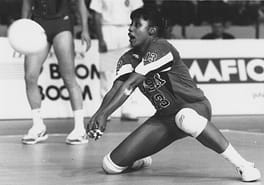
Photo: Life in photos / CC BY 4.0 (source: Wikimedia Commons)
Tara Cross-Battle was born on September 16, 1968 in Houston, Texas, United States and is credited as a beach volleyball player. That puts Tara Cross-Battle at 58 years old in 2026. Education on record includes California State University, Long Beach. Listed accolades include Honda Sports Award for Volleyball (1990). The listed height is 183 cm.
My Take
Tara Cross-Battle commands my admiration through sheer endurance. Four consecutive Olympic Games, a bronze medal in Barcelona in 1992, and a final appearance in Athens in 2004 describe a career measured in decades, not seasons. To hold a place among the world's best for that long, anchoring the US national team again and again, demands a discipline most athletes never approach. Topped off by a Honda Sports Award in college, hers is the profile of a true pillar rather than a flash in the pan. I respect sustained, unbroken excellence above almost anything else in sport, and she embodies it.
This take was written by generative AI, one per person, from publicly reported facts (editorial policy). It is a reading of the record, not reporting.
1. Profile
- Name (English)
- Tara Cross-Battle
- Name (Japanese)
- タラ・クロス=バトル
- Reading
- たら・くろす=ばとる
- Born
- September 16, 1968 (age 58)
- Origin
- Houston, Texas, United States
- Height
- 183 cm
- Occupation
- volleyball player / beach volleyball player
- Zodiac / Chinese zodiac
- Virgo / Monkey
2. Background
- University
- California State University, Long Beach
Awards & achievements
- 1990 Honda Sports Award for Volleyball
3. Links
4. About this entry
Tags
- Last updated
Facts are limited to publicly available information up to 2024; non-public or unconfirmed items are omitted. English text is machine-assisted (facts translated by Sonnet, "My Take" written by Opus 4.8). The Japanese page is the source of record.
Frequently asked questions
When was Tara Cross-Battle born?
Born September 16, 1968 (age 58).
Where is Tara Cross-Battle from?
Tara Cross-Battle is from Houston, Texas, United States.
What does Tara Cross-Battle do?
Tara Cross-Battle works as volleyball player, beach volleyball player.
How tall is Tara Cross-Battle?
Tara Cross-Battle is 183 cm.
Volleyball player — see all → · Beach volleyball player — see all → · More people from the United States →