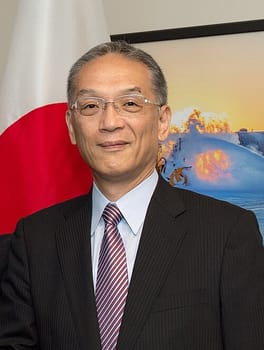
Photo: U.S. Department of Defense photo by Army Sgt. Amber I. Smith / Public domain (source: Wikimedia Commons)
My Take
Tetsuro Kuroe is the kind of guy you almost never hear about, which is kind of the whole point — he's a career bureaucrat, and bureaucrats who make noise are usually the ones making headlines for the wrong reasons. Born in 1958 in Nanyo, a quiet inland city in Yamagata Prefecture, he made the long climb to Tokyo University, which in Japan is basically the golden ticket to Kasumigaseki and a life spent shaping policy from behind closed doors. He rose through the Defense Agency to become administrative vice-minister of defense in 2015, before leaving in 2017 amid the controversy over the South Sudan peacekeeping logs. What I find quietly impressive is the route: small-town Yamagata, through a competitive prefectural high school, all the way to the top of the Japanese education ladder.
This take was written by generative AI, one per person, from publicly reported facts (editorial policy). It is a reading of the record, not reporting.
Overview
Tetsuro Kuroe is a Japanese bureaucrat born on March 25, 1958, in Nanyo City, Yamagata Prefecture. He attended Yamagata Prefectural Yamagata Higashi High School before going on to graduate from the University of Tokyo. He joined the Defense Agency in 1981 and served as Administrative Vice-Minister of Defense from 2015 until 2017, when he resigned after being disciplined over the handling of the Ground Self-Defense Force's South Sudan PKO activity logs.
1. Profile
- Name (English)
- Tetsuro Kuroe
- Name (Japanese)
- 黒江哲郎
- Reading
- くろえ てつろう
- Born
- March 25, 1958 (age 68)
- Origin
- Nanyo City, Yamagata Prefecture, Japan
- Occupation
- Bureaucrat
- Zodiac / Chinese zodiac
- Aries / Dog
2. Background
- High school
- Yamagata Prefectural Yamagata Higashi High School
- University
- University of Tokyo
3. Links
- Wikipedia (Japanese)https://ja.wikipedia.org/wiki/%E9%BB%92%E6%B1%9F%E5%93%B2%E9%83%8E
- Wikidatahttps://www.wikidata.org/wiki/Q30925255
4. About this entry
Tags
- Last updated
Only publicly available facts are listed; non-public or unconfirmed items are omitted. Base data was compiled from Wikidata from June 2026 onward; ages are recalculated daily and deaths are checked against Wikidata on an ongoing basis. English text is machine-assisted (facts translated by Sonnet, "My Take" written by Opus 4.8). The Japanese page is the source of record.
Frequently asked questions
When was Tetsuro Kuroe born?
Tetsuro Kuroe was born on March 25, 1958 and is 68 years old.
Where is Tetsuro Kuroe from?
Tetsuro Kuroe is from Nanyo City, Yamagata Prefecture, Japan.
What does Tetsuro Kuroe do?
Tetsuro Kuroe works as Bureaucrat.
Where did Tetsuro Kuroe study?
Tetsuro Kuroe attended University of Tokyo.
Bureaucrat — see all → · More people from Japan → · More people born on March 25 →