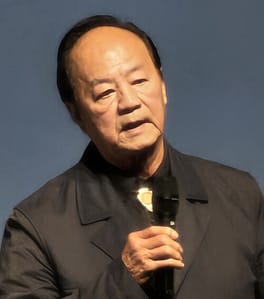
Photo: Will629 / CC0 (source: Wikimedia Commons)
Born on August 19, 1946 in Xinhui District, People's Republic of China, Ti Lung is a film actor, television actor and film director. That puts Ti Lung at 80 years old in 2026. Awards on record include Golden Horse Award for Best Leading Actor (1986).
My Take
Ti Lung is the kind of actor who makes you realize just how golden the golden age of Hong Kong cinema really was. Born in Guangdong and discovered by Shaw Brothers, he spent the 1970s carving out this effortlessly cool, noble-swordsman screen presence in wuxia classics like The Duel and The Blood Brothers — films where the action was brutal but the emotions hit even harder. What I find genuinely impressive is that he wasn't just a pretty face with good kicks; he could carry the dramatic weight of a whole film on his shoulders. His 1986 Golden Horse Award for Best Leading Actor proved the critics eventually caught up. And then there's his late-career renaissance in John Woo's A Better Tomorrow, playing opposite Chow Yun-fat with this quiet gravitas that felt earned over a lifetime of work. A true titan of Asian cinema.
This take was written by generative AI, one per person, from publicly reported facts (editorial policy). It is a reading of the record, not reporting.
1. Profile
- Name (English)
- Ti Lung
- Name (Japanese)
- ティ・ロン
- Reading
- てぃ・ろん
- Born
- August 19, 1946 (age 80)
- Origin
- Xinhui District, People's Republic of China
- Occupation
- film actor / television actor / film director / actor / screenwriter
- Zodiac / Chinese zodiac
- Leo / Dog
2. Background
Awards & achievements
- 1986 Golden Horse Award for Best Leading Actor
3. Links
- Wikipedia (English)https://en.wikipedia.org/wiki/Ti%20Lung
- Wikipedia (Japanese)https://ja.wikipedia.org/wiki/%E3%83%86%E3%82%A3%E3%83%BB%E3%83%AD%E3%83%B3
- Wikidatahttps://www.wikidata.org/wiki/Q700405
4. About this entry
Tags
- Last updated
Only publicly available facts are listed; non-public or unconfirmed items are omitted. Base data was compiled from Wikidata from June 2026 onward; ages are recalculated daily and deaths are checked against Wikidata on an ongoing basis. English text is machine-assisted (facts translated by Sonnet, "My Take" written by Opus 4.8). The Japanese page is the source of record.
Frequently asked questions
When was Ti Lung born?
Ti Lung was born on August 19, 1946 and is 80 years old.
Where is Ti Lung from?
Ti Lung is from Xinhui District, People's Republic of China.
What does Ti Lung do?
Ti Lung works as film actor, television actor, film director, actor, screenwriter.
Film actor — see all → · Television actor — see all → · More people from the People's Republic of China → · More people born on August 19 →